Exodus 12:13 Now the blood shall be a sign (Hebrew word – OHT) for you on the houses where you are. And when I see the blood, I will pass over you; and the plague shall not be on you to destroy you when I strike the land of Egypt.
As we discussed, the word for “sign” in ancient Hebrew is “oht”. It was used in Genesis to designate God’s covenant sign with Noah, (the rainbow). And we see now the same word again, in Exodus, identified with the deliverance of the Jewish people from the tenth plague, when the angel of death passed through all Egypt to strike the firstborn. Anyone under the “sign” of the blood was spared.
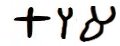
This “sign” of deliverance for the ancient Israelites, spelled “aleph”-“vav”-“tav” in ancient Hebrew letters, explicitly, the sign of blood on doorposts and lintel, also clearly spells out, “leader”, “nail”, and “cross”. Just as blood on the doorposts was the only sign of deliverance for Israel, the cross of the Messiah Yeshua (Jesus, the Christ), is the only sign of deliverance from eternal death for all mankind. [Acts 4:12]
The mystery of salvation was originally revealed in the very letters God used to unfold its story. In the ancient Hebrew He speaks to us from the beginning of time, that the sign of the covenant would be “the leader who was nailed to the cross”. Be in awe of the Father’s love for us!
Copyright 1999-2026 Worthy Devotions. This devotional was originally published on Worthy Devotions and was reproduced with permission.
How to display the above article within the Worthy Suite WordPress Plugin.
[worthy_plugins_devotion_single_body]Last night marked the beginning of Shavuot–a feast that many Christians recognize as Pentecost, the day the Holy Spirit was poured out in Acts 2. But the roots of Shavuot stretch back much further. Long before that upper room encounter–about 1,500 years earlier–Shavuot was the day God gave the law to Moses on Mount Sinai, writing His commandments on tablets of stone.
In a world trembling with uncertainty–political unrest, economic turmoil, natural disasters–God is speaking again. Not in whispers, but with the shaking that reorders lives, redefines kingdoms, and removes everything that cannot stand in the presence of His glory. He is preparing us for a kingdom that cannot be moved. But in the midst of the shaking, there is rest — a deep, unshakable rest reserved for the people of God. Not rest as the world gives — temporary relief or distraction — but the kind that anchors the soul in the storm, the kind that is rooted in Yeshua (Jesus), our rest.
Just as a bird needs both wings to fly, a victorious life requires both faith and obedience. In Joshua, God calls Joshua to lead Israel into the Promised Land, not just with bold confidence but with complete dependence on His Word. Faith believes what God says; obedience acts upon it. One without the other stalls the journey. This moment wasn’t just about crossing into the promise land — it was about stepping into covenant reality, where trust in God’s promise was matched by surrender to God’s command.
The Book of Joshua offers more than a military history; it reveals the spiritual dynamics behind every victory and defeat in the life of a believer.
After Moses’ death, God commissioned Joshua to lead Israel into Canaan—a real place that carried profound spiritual meaning. Canaan was not a picture of heaven, for it was filled with enemies, obstacles, and the ongoing need for faith and obedience. Instead, it symbolized the believer’s journey: a life marked by conflict and conquest, failure and faithfulness, struggle and surrender. Just as Joshua was told to rise and cross the Jordan, every follower of Christ is called to move beyond mere spiritual survival into a victorious, Spirit-empowered walk—a life that embraces the fullness of God’s promises with courage, rest, and purpose.
When we hear the word Hineini—”Here I am,” many of us immediately think of the prophet Isaiah in chapter 6, standing before the throne of God, overwhelmed by His holiness. After being cleansed by the burning coal, Isaiah hears the Lord ask, “Whom shall I send?” and responds with the now-famous phrase: “Hineini—Here am I. Send me.”
Following Yeshua (Jesus) isn’t just about believing the right things or checking boxes. It’s about wanting to truly know God — to experience Him personally. And here’s the amazing part: even that desire starts with Him. God is the one who stirs our hearts and awakens our longing. If you find yourself hungry for more of Him, it’s because He’s already working in you.