Exodus 12:13 Now the blood shall be a sign (Hebrew word – OHT) for you on the houses where you are. And when I see the blood, I will pass over you; and the plague shall not be on you to destroy you when I strike the land of Egypt.
As we discussed, the word for “sign” in ancient Hebrew is “oht”. It was used in Genesis to designate God’s covenant sign with Noah, (the rainbow). And we see now the same word again, in Exodus, identified with the deliverance of the Jewish people from the tenth plague, when the angel of death passed through all Egypt to strike the firstborn. Anyone under the “sign” of the blood was spared.
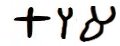
This “sign” of deliverance for the ancient Israelites, spelled “aleph”-“vav”-“tav” in ancient Hebrew letters, explicitly, the sign of blood on doorposts and lintel, also clearly spells out, “leader”, “nail”, and “cross”. Just as blood on the doorposts was the only sign of deliverance for Israel, the cross of the Messiah Yeshua (Jesus, the Christ), is the only sign of deliverance from eternal death for all mankind. [Acts 4:12]
The mystery of salvation was originally revealed in the very letters God used to unfold its story. In the ancient Hebrew He speaks to us from the beginning of time, that the sign of the covenant would be “the leader who was nailed to the cross”. Be in awe of the Father’s love for us!
Copyright 1999-2026 Worthy Devotions. This devotional was originally published on Worthy Devotions and was reproduced with permission.
How to display the above article within the Worthy Suite WordPress Plugin.
[worthy_plugins_devotion_single_body]“Don’t be anxious”…even though it's a perfectly natural response to mounting threats; sickness, finances, employment, uncertainty, emotional stress, family crises...Nevertheless, it says, "Don't be anxious about anything". Instead, pray!
A major earthquake struck Taiwan over the weekend, which triggered a tsunami warning as far away as Japan.
This reminded me of when we first moved to Israel, in 2003.
The word "verily", in this verse, is the Hebrew word “emunah” (em-oo-nah). It also means "faith" or "faithfully". When we trust in the Lord, and our trust is demonstrated by doing good, He declares that He will faithfully feed us. How will we be fed?
In the early 1800's a preacher gave a message to call men to join him on the mission field in Africa. In the audience were only a few women along with a boy. The pastor knew that few women were expected to volunteer to face harsh African jungle conditions. However, he gave the message; and no one responded. What he didn't realize was that he had touched the heart of a little boy whose name was David Livingstone. This boy would grow up to spend the rest of his life ministering to Africa's unreached tribes.
A.W. Tozer had an interesting commentary on this verse. He said: "Faith is seeing the invisible, but not the nonexistent."
When does God answer our prayers? And when do we receive what we ask of Him? And when are we confident He has heard our requests? Many of us wonder why our prayers seem to go unanswered.
A farmer was showing his visiting citydwelling friend around his farm. "Watch this!" he said. He gave a whistle and his little dog came running from the house, herded the cattle into the corral, then latched the gate with her paw. "Wow, that's some dog -- what's her name?" The forgetful farmer thought for a minute and then asked, "What do you call that red flower that smells good and has thorns on the stem?" "A rose?" "That's it!" The farmer turned to his wife. "Hey Rose, what do we call this dog?"