Exodus 12:13 Now the blood shall be a sign (Hebrew word – OHT) for you on the houses where you are. And when I see the blood, I will pass over you; and the plague shall not be on you to destroy you when I strike the land of Egypt.
As we discussed, the word for “sign” in ancient Hebrew is “oht”. It was used in Genesis to designate God’s covenant sign with Noah, (the rainbow). And we see now the same word again, in Exodus, identified with the deliverance of the Jewish people from the tenth plague, when the angel of death passed through all Egypt to strike the firstborn. Anyone under the “sign” of the blood was spared.
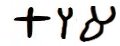
This “sign” of deliverance for the ancient Israelites, spelled “aleph”-“vav”-“tav” in ancient Hebrew letters, explicitly, the sign of blood on doorposts and lintel, also clearly spells out, “leader”, “nail”, and “cross”. Just as blood on the doorposts was the only sign of deliverance for Israel, the cross of the Messiah Yeshua (Jesus, the Christ), is the only sign of deliverance from eternal death for all mankind. [Acts 4:12]
The mystery of salvation was originally revealed in the very letters God used to unfold its story. In the ancient Hebrew He speaks to us from the beginning of time, that the sign of the covenant would be “the leader who was nailed to the cross”. Be in awe of the Father’s love for us!
Copyright 1999-2026 Worthy Devotions. This devotional was originally published on Worthy Devotions and was reproduced with permission.
How to display the above article within the Worthy Suite WordPress Plugin.
[worthy_plugins_devotion_single_body]This week, we entered into the feast of Tabernacles — in Hebrew — Sukkot. Sukkot is known as “The Feast” in which God commands us to rejoice. As we entered this feast of rejoicing on Monday night, I think it is only fitting that we commit ourselves to a life of joy. “But how?” you say. We need to make a choice — a choice to rejoice! Wow, I’m a poet and didn’t know it, lol!
The Day of Atonement, Yom Kippur in Hebrew, was the single most important day during the time of Yeshua (Jesus) and still holds utmost significance in Israel and among Jews worldwide today.
Last night, we concluded the feast of Yom Kippur where Jews throughout the world “afflicted” their souls. However, most kids in Israel look at Yom Kippur as “ride your bikes in the streets day!” You see, Yom Kippur in Israel is the one day when TV and radio stations are completely shut down and the streets are almost completely void of vehicles of any kind. Ironically, some of the only fully operational locations in Israel on Yom Kippur are the hospital emergency rooms – since kids who finally have no restraints on their bikes, skateboards, and roller skates tend to take risks they wouldn’t normally take – it’s Yom Kippur – they have the streets to themselves!
During the feast of Tabernacles in Yeshua's (Jesus') day, the temple priests would set up four great lampstands with golden lampholders, which they would light with the aid of enormous ladders in the Temple courtyard. The lighting of these lamps began the celebration of the "Great Hosannah" (Hoshannah Rabbah, in Hebrew).
Yom Kippur, the Day of Atonement is upon us. Beginning tomorrow evening, Yom Kippur marks the holiest of all holy days on the Hebrew calendar. It is the anniversary of the fall of man and it is the climax of the time of Teshuvah (repentance). Starting tonight night and into Saturday, all around the world, the religious will fast from food and water and read prayers in the synagogue, as will the majority of traditional Jews.
Rosh Hashanah traditionally marks the Jewish New Year. "Shanah" is a unique Hebrew word meaning "to repeat, revise, or go over again". As we begin the new year, with fall, then winter, spring, and summer, we remember the cyclical pattern of time in God's creation. The nature of life is to repeat itself -- to continue in a cycle, marked by Rosh HaShannah -- a New Year. Although time is moving in a direction toward a definite destiny determined by the Creator, it does so in cycles ... truly, "what goes around comes around".
Earlier this week, we celebrated the Biblical festival of Yom Teruah (Feast of Trumpets) otherwise known as Rosh Ha Shana. What's interesting about Rosh Ha Shana (the Jewish celebration of the New Year), is that it doesn't fall on the first day of the first month. It actually falls on the first day of the seventh month! It's difficult for outsiders to understand this concept, but if we study how the Jewish year begins and how God is outlining this age according to the Jewish feasts it all makes sense.