Php 1:21 For to me to live is Christ, and to die is gain.
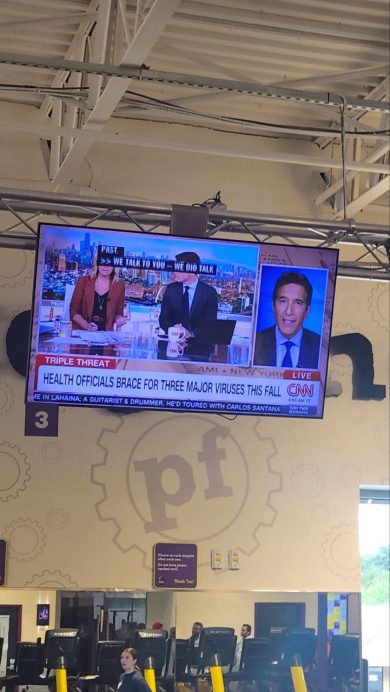
I happened (on rare occasion) the other day to see a CNN headline, “Health Officials Brace for Three Major Viruses this Fall”. Immediately, I thought, “Not again!” Yet, scouring the headlines, it now appears that several colleges are instituting mask mandates even though there isn’t a case of illness yet. While the world is being prepared for an “outbreak” of disease, I’m hoping we may learn a lesson from history so that, perhaps, we’ll see an “outbreak” of revival!
 Church history reveals that God used pandemics to test the saints, demonstrate their faith, courage, and love, and dramatically advance the gospel. The Antonine Plague in the 2nd century lasted over 10 years, resulting in at least 5 million deaths. The Plague of Cyprian in the 3rd century devastated the population of Alexandria, dropping it from 500,000 to 190,000.
While pagan priests were fleeing the plague and leaving the sick to die, it was the steadfast faith of the saints that cared for the sick in the face of death. This rarely acknowledged Christian heroism radically transformed the Roman Empire, leading to the eradication of the pagan gods and eventually to a massive social transformation.
Cyprian, the bishop of Carthage, witnessed and described the atmosphere of the time:
“There is nothing remarkable in cherishing merely our own people with the due attentions of love, but that one might become perfect, he who should do something more than heathen men or publicans; overcoming evil with good, and practicing a merciful kindness like that of God, he should love his enemies as well…Thus the good was done to all men, not merely to the household of faith.”
“By the terrors of mortality and of the times, lukewarm men are heartened, the listless nerved, the sluggish awakened; deserters are compelled to return; heathens brought to believe; the congregation of established believers is called to rest; fresh and numerous champions are banded in heartier strength for the conflict, and having come into warfare in the season of death, will fight without fear of death, when the battle comes.”
Historians noted that the Christians’ compassion and devotion to tending the sick during the pandemics caused the pagan world to collapse and saw an explosive growth of Christianity with many coming to faith.
Our brother Paul wrote, “For me to live is Christ, and to die is gain.” [Philippians 1:21] Death threats, which came to him in many forms, did not deter him at all from his divine purpose in the Gospel; they simply became part of his amazing testimony, bringing innumerable souls to the revelation of the Messiah. Cyprian’s marvelous account of fearless and faith-filled saints exemplifies the power and love of Christ. If the above headline is true, let’s seize the opportunity.
Copyright 1999-2026 Worthy Devotions. This devotional was originally published on Worthy Devotions and was reproduced with permission.
How to display the above article within the Worthy Suite WordPress Plugin.
[worthy_plugins_devotion_single_body]Some time ago, I wrote a devotional about not worrying for tomorrow because tomorrow holds its own worries. But it occurred to me recently, that just about as often as we worry for tomorrow, we fret about yesterday. How many times do we find ourselves saying, "I wish things could be the way they were, I wish I was younger, I wish I could fit into those jeans again, I wish I didn't make that terrible mistake ... you fill in the blank"?
Colonel G.W. Goethals, the man responsible for the completion of the Panama Canal, had major problems with the climate and the geography as it was being built. If that wasn’t enough to deal with, he had an even bigger problem. It was the growing criticism back home from those who predicted he’d never finish the project and had opinions about how to do it better.
While on the road to Damascus, Jesus appeared to Saul, blinded him and directed him to go to Damascus. There, God spoke to Ananias of Saul and told to lay hands on this troubled man. Ananias did as he commanded and Saul was filled with the Holy Spirit, healed of his blindness and immediately baptized.
Shortly after WWI, Lawrence of Arabia was entertaining some of his Arab friends in Paris. He showed them the sights of the city: the Arc d’Triomph, the Louvre, the Champs Elysees. It was a remarkable irony to Lawrence that these amazing sights were not what most impressed his Arab friends — but rather the bathtub faucet of their hotel room. They were completely astonished that someone could turn a handle…and get all the water he wanted.
In this prophetic passage the critical question is immediately followed by the powerfully convicting answer. Joel prophesies the Day of the Lord, and asks, “Who can endure it?” The next word “therefore”, is followed by the prophet’s urgent counsel: “Turn to me with all your heart, with fasting, with weeping and with mourning!”
The Lord gave us His promise to send us a helper -- the Holy Spirit. The word for "helper" in the NT Greek is "paraclete". This word has more meaning then simply "helper" -- it was also an ancient term used in warfare. When Greek warriors went onto the battle field, they went out in pairs, so when the enemy attacked they could stand back-to-back, covering each other's blind side. The battle partner in Greek was called a "paraclete" -- he was there to watch your back!
When I was younger I used to take an ax and cut up firewood from the woods behind our house. The one thing I always did was sharpen my axe! A dull axe meant harder work chopping through fallen trees. The sharper the ax the less effort and energy required for the task. So I learned early on to sharpen my ax before venturing into the woods, and I saved myself a lot of time and energy. (Besides I was a small kid, growing up, so I needed all the help I could get! 😉 )