Php 1:21 For to me to live is Christ, and to die is gain.
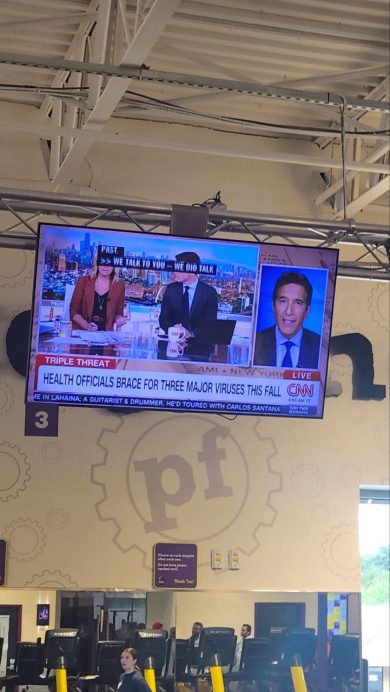
I happened (on rare occasion) the other day to see a CNN headline, “Health Officials Brace for Three Major Viruses this Fall”. Immediately, I thought, “Not again!” Yet, scouring the headlines, it now appears that several colleges are instituting mask mandates even though there isn’t a case of illness yet. While the world is being prepared for an “outbreak” of disease, I’m hoping we may learn a lesson from history so that, perhaps, we’ll see an “outbreak” of revival!
 Church history reveals that God used pandemics to test the saints, demonstrate their faith, courage, and love, and dramatically advance the gospel. The Antonine Plague in the 2nd century lasted over 10 years, resulting in at least 5 million deaths. The Plague of Cyprian in the 3rd century devastated the population of Alexandria, dropping it from 500,000 to 190,000.
While pagan priests were fleeing the plague and leaving the sick to die, it was the steadfast faith of the saints that cared for the sick in the face of death. This rarely acknowledged Christian heroism radically transformed the Roman Empire, leading to the eradication of the pagan gods and eventually to a massive social transformation.
Cyprian, the bishop of Carthage, witnessed and described the atmosphere of the time:
“There is nothing remarkable in cherishing merely our own people with the due attentions of love, but that one might become perfect, he who should do something more than heathen men or publicans; overcoming evil with good, and practicing a merciful kindness like that of God, he should love his enemies as well…Thus the good was done to all men, not merely to the household of faith.”
“By the terrors of mortality and of the times, lukewarm men are heartened, the listless nerved, the sluggish awakened; deserters are compelled to return; heathens brought to believe; the congregation of established believers is called to rest; fresh and numerous champions are banded in heartier strength for the conflict, and having come into warfare in the season of death, will fight without fear of death, when the battle comes.”
Historians noted that the Christians’ compassion and devotion to tending the sick during the pandemics caused the pagan world to collapse and saw an explosive growth of Christianity with many coming to faith.
Our brother Paul wrote, “For me to live is Christ, and to die is gain.” [Philippians 1:21] Death threats, which came to him in many forms, did not deter him at all from his divine purpose in the Gospel; they simply became part of his amazing testimony, bringing innumerable souls to the revelation of the Messiah. Cyprian’s marvelous account of fearless and faith-filled saints exemplifies the power and love of Christ. If the above headline is true, let’s seize the opportunity.
Copyright 1999-2026 Worthy Devotions. This devotional was originally published on Worthy Devotions and was reproduced with permission.
How to display the above article within the Worthy Suite WordPress Plugin.
[worthy_plugins_devotion_single_body]In the stillness of a desert night, surrounded by cut offerings and the lingering scent of sacrifice, Abram beheld something utterly sacred — God Himself, in the form of a smoking oven and a burning torch, passing between the pieces of a covenant. It was not Abram who walked through the blood-soaked path. It was God alone. And that changes everything.
Tonight we’ll participate in the Independence Day celebration in Israel — and what a party! — shows, fireworks, music, dancing, everything under the sun!
Yesterday, Israel observed Yom HaShoah—Holocaust Remembrance Day—honoring the memory of the six million Jews who perished. Tragically, a recent poll reveals that nearly half of Israelis fear the possibility of another Holocaust. In light of this sobering reality, I want to share a powerful story of one remarkable woman who rescued 2,500 Jewish children from the ghettos during World War II.
One night a house caught fire and a young boy was forced to flee flames by jumping to the ground from the roof. His father stood on the ground below with outstretched arms, calling to his son, “Jump! I’ll catch you.” But the boy was afraid — he couldn’t see his father — all he could see was flame, smoke, and blackness. He was afraid. Still, his father kept yelling: “Jump son! I will catch you!” But the boy refused, crying, “Daddy, I can’t see you!” His father replied, “It’s ok son — I can see you — and that’s all that matters!”
After forty years of wandering in the wilderness, Israel finally crossed into the Promised Land—on the 10th day of Nissan, the very day they had been commanded to choose their Passover lamb [Exodus 12:3 , Joshua 4:19]. They couldn’t enter into their inheritance until a lamb was chosen—a powerful foreshadowing of the more excellent Lamb to come, in preparation for the Passover [Joshua 5:10], they were about to observe at Gilgal.
In the days of Yeshua (Jesus), the cross was an instrument of death, and crucifixion, a horrible method of torture. Over the next 200 years, in light of the Lord’s resurrection, the cross became identified with Christian faith and was transformed into a symbol of life and hope. Yeshua was able to turn it upside down, transforming an instrument of death into a symbol of life.
The New Testament records that when Yeshua (Jesus) died; there was a great earthquake and the veil of the Temple was torn in two. The size of this gigantic veil is not recorded in the NT…but we read from other sources that it was roughly 60 feet long and 30 feet wide with multiple woven layers the thickness of a man’s hand! It was hung on a crossbeam stone – a lintel – which was over 30 feet long and weighed more than 30 tons! It was not an easy cloth to tear…