by Stefan J. Bos, Worthy News Europe Bureau Chief
SOFIA (Worthy News) – Bulgaria has formally consigned its longtime national currency, the lev, to history after entering the euro zone on New Year’s Day, becoming the 21st member of the single-currency bloc despite lingering concerns among citizens that the move could fuel higher prices.
Celebrations marked the transition in the capital, with euro coins displayed on the façade of the Bulgarian National Bank and fireworks lighting up the skies over Sofia as the euro became the country’s official currency.
President Rumen Radev hailed the euro adoption as the “final step” in Bulgaria’s EU integration, as thousands of people braved sub-zero temperatures in the capital Sofia to celebrate the New Year.
However Radev regretted that Bulgarians had not been consulted by referendum on the adoption. “This refusal was one of the dramatic symptoms of the deep divide between the political class and the people, confirmed by mass demonstrations across the country.”
ECONOMIC AND POLITICAL SIGNIFICANCE
Bulgaria’s accession raised the number of Europeans using the euro to more than 350 million, following Croatia, which was the last nation to join the single-currency area in January 2023.
Beyond replacing banknotes and coins, becoming the euro zone’s newest member gives Bulgaria a seat on the rate-setting Governing Council of the European Central Bank—a goal successive governments have pursued since the Balkan nation joined the European Union in 2007.
“Our money will be in a different currency—if I had 10,000 leva, now I will have about 5,100 euros. It’s all the same,” said Stefan Bisterkov, a driving instructor. “And I think it will be better.”
Jeweller Antonia Tsvetkova also voiced optimism. “My expectations from adopting the euro are positive. I don’t think there will be anything to worry about—quite the opposite. We will only benefit from this,” she said, adding that travel would become easier without the need to exchange currency. “Now everything will be normal.”
PUBLIC OPINION DIVIDED
Despite the celebrations, opinion polls suggest Bulgarians remain deeply split over the change: Forty-nine percent oppose adopting the euro, while 42 percent support the move and nine percent remain undecided, according to a Eurobarometer poll released last month.
Some Bulgarians fear that the switch to the euro will drive up prices, while others remain suspicious of the political class.
Political uncertainty has underscored the historic currency change. The government of Prime Minister Rosen Zhelyazkov resigned last month after tens of thousands protesters filled the centre of Sofia and took to the streets in cities across the country.
Zhelyazkov stepped down ahead of a planned vote of no confidence in parliament and just weeks before the euro’s introduction. Demonstrators accused his minority centre-right government, in power since January 2025, of widespread corruption.
BUSINESS BACKS EURO
The administration had already scrapped a controversial budget plan for next year in response to the protests, officials said.
Despite public skepticism and political turmoil, business groups have largely backed euro adoption
That argue it will strengthen investor confidence, reduce transaction costs, and deepen Bulgaria’s integration into Europe’s economic core.
Authorities have pledged to closely monitor prices and enforce consumer-protection measures during the transition, as the Balkan nation embarks on one of the most significant economic shifts in its modern history.
Copyright 1999-2026 Worthy News. This article was originally published on Worthy News and was reproduced with permission.
The following code is how the above article is generated with the Worthy Suite WordPress Plugin.
[worthy_plugins_news_story_body]This is how you display a story with an image.
Bulgaria Adopts Euro Amid Celebration And Public Concern
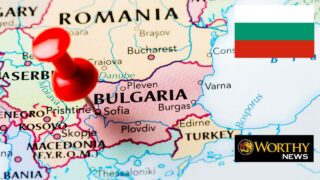
by Stefan J. Bos, Worthy News Europe Bureau Chief
SOFIA (Worthy News) – Bulgaria has formally consigned its longtime national currency, the lev, to history after entering the euro zone on New Year’s Day, becoming the 21st member of the single-currency bloc despite lingering concerns among citizens that the move could fuel higher prices.
Celebrations marked the transition in the capital, with euro coins displayed on the façade of the Bulgarian National Bank and fireworks lighting up the skies over Sofia as the euro became the country’s official currency.
President Rumen Radev hailed the euro adoption as the “final step” in Bulgaria’s EU integration, as thousands of people braved sub-zero temperatures in the capital Sofia to celebrate the New Year.
However Radev regretted that Bulgarians had not been consulted by referendum on the adoption. “This refusal was one of the dramatic symptoms of the deep divide between the political class and the people, confirmed by mass demonstrations across the country.”
ECONOMIC AND POLITICAL SIGNIFICANCE
Bulgaria’s accession raised the number of Europeans using the euro to more than 350 million, following Croatia, which was the last nation to join the single-currency area in January 2023.
Beyond replacing banknotes and coins, becoming the euro zone’s newest member gives Bulgaria a seat on the rate-setting Governing Council of the European Central Bank—a goal successive governments have pursued since the Balkan nation joined the European Union in 2007.
“Our money will be in a different currency—if I had 10,000 leva, now I will have about 5,100 euros. It’s all the same,” said Stefan Bisterkov, a driving instructor. “And I think it will be better.”
Jeweller Antonia Tsvetkova also voiced optimism. “My expectations from adopting the euro are positive. I don’t think there will be anything to worry about—quite the opposite. We will only benefit from this,” she said, adding that travel would become easier without the need to exchange currency. “Now everything will be normal.”
PUBLIC OPINION DIVIDED
Despite the celebrations, opinion polls suggest Bulgarians remain deeply split over the change: Forty-nine percent oppose adopting the euro, while 42 percent support the move and nine percent remain undecided, according to a Eurobarometer poll released last month.
Some Bulgarians fear that the switch to the euro will drive up prices, while others remain suspicious of the political class.
Political uncertainty has underscored the historic currency change. The government of Prime Minister Rosen Zhelyazkov resigned last month after tens of thousands protesters filled the centre of Sofia and took to the streets in cities across the country.
Zhelyazkov stepped down ahead of a planned vote of no confidence in parliament and just weeks before the euro’s introduction. Demonstrators accused his minority centre-right government, in power since January 2025, of widespread corruption.
BUSINESS BACKS EURO
The administration had already scrapped a controversial budget plan for next year in response to the protests, officials said.
Despite public skepticism and political turmoil, business groups have largely backed euro adoption
That argue it will strengthen investor confidence, reduce transaction costs, and deepen Bulgaria’s integration into Europe’s economic core.
Authorities have pledged to closely monitor prices and enforce consumer-protection measures during the transition, as the Balkan nation embarks on one of the most significant economic shifts in its modern history.
Copyright 1999-2026 Worthy News. This article was originally published on Worthy News and was reproduced with permission.
[worthy_plugins_news_story_title]
<div style="text-align:right; padding:0px 0px 10px 15px; float:right; width:300px;"><img src="[worthy_plugins_news_story_image name=sm_medium]" alt="" /></div>[worthy_plugins_news_story_body]