by Emmitt Barry, Worthy News Washington D.C. Bureau Chief
Trump Says Talks Continue as Tehran Threatens Hormuz, Demands Israel Halt Lebanon Offensive
(Worthy News) – Conflicting messages from Washington and Tehran left the future of the Iran war uncertain Monday, as President Donald Trump said talks with the Islamic Republic were still moving forward even after Iranian state media reported that Tehran had suspended indirect negotiations over Israel’s expanding offensive against Hezbollah in Lebanon.
The contradiction underscored the fragile and increasingly murky state of the April ceasefire between the United States and Iran. On one side, Trump insisted diplomacy remained alive. On the other, Iranian officials threatened to close the Strait of Hormuz, activate pressure along other strategic waterways, and halt talks unless Israel stops its military operations in Lebanon and Gaza.
“Talks are continuing, at a rapid pace, with the Islamic Republic of Iran,” Trump wrote Monday on Truth Social, according to reports from Reuters and CBS News.
Yet Iran’s semi-official Tasnim News Agency, which is affiliated with the Islamic Revolutionary Guard Corps, reported that Tehran had suspended “discussions and exchanges of texts through intermediaries” because of Israel’s ongoing operations in Lebanon. Reuters reported that Iran said it was stopping message exchanges with Washington and could move to block the Strait of Hormuz, one of the world’s most critical oil shipping chokepoints.
The diplomatic confusion came as the war showed few signs of slowing. Iranian officials accused the United States and Israel of violating the April ceasefire, arguing that the agreement applied not only to direct U.S.-Iran fighting but also to Iran-backed fronts across the region, including Lebanon.
Iranian Foreign Minister Abbas Araghchi wrote Monday on X that “the ceasefire between Iran and the U.S. is unequivocally a ceasefire on all fronts, including in Lebanon.”
“Its violation on one front is a violation of the ceasefire on all fronts,” Araghchi added. “The U.S. and Israel are responsible for the consequences of any violation.”
Tehran’s position is clear: Israel’s campaign against Hezbollah must stop before meaningful talks can resume. Washington’s position is far less clear. Trump told NBC News that Iran had not informed him it was suspending talks and suggested he was prepared to let the process go quiet for a while.
“I think we’ve been talking too much if you want to know the truth,” Trump said, according to Reuters. “I think going silent would be very good, and that could be for a long time.”
In a separate interview with CNBC, Trump appeared even less concerned about whether negotiations survived.
“I don’t care if they’re over, honestly … I couldn’t care less,” Trump said.
Still, shortly after those remarks were reported, the president posted that talks were continuing at a rapid pace, leaving diplomats, allies, and adversaries to read between the lines.
The mixed signals are unfolding against a widening regional conflict. Israel has pressed deeper into southern Lebanon after months of missile and drone attacks from Hezbollah, the Iranian-financed terrorist organization. The Israel Defense Forces said troops captured the strategic Beaufort Ridge near Nabatieh, marking Israel’s deepest incursion into Lebanon since 2000. The IDF said the operation was aimed at degrading Hezbollah infrastructure and protecting northern Israeli communities.
The Israeli military also announced that it had eliminated Hezbollah missile-array commander Mohammed Mousa Mteirek in the Nabatieh area on Sunday.
Iran, meanwhile, has sought to turn the Lebanon front into a central condition of the broader ceasefire. Mohammad Mokhber, a member of Iran’s Expediency Discernment Council and an adviser to Supreme Leader Ayatollah Mojtaba Khamenei, said after meeting Hezbollah envoy Abdullah Safi al-Din in Tehran that any ceasefire failing to account for Iran’s allied groups was irrelevant.
Mohsen Rezaei, a former Islamic Revolutionary Guard Corps commander and senior adviser to Khamenei, issued a similar warning.
“We will not allow the maritime blockade to continue, and an escalation of tensions in Lebanon will not be tolerated. The patience of the armed forces of the Islamic Republic of Iran has its limits,” Rezaei wrote Monday on X.
Iranian officials have also threatened to maintain the closure of the Strait of Hormuz and apply pressure near the Bab el-Mandeb Strait, the narrow passage connecting the Red Sea to the Gulf of Aden. Tasnim reported that Tehran and its allies are considering such steps as part of a broader campaign to punish Israel and its supporters.
That threat raises the stakes far beyond the battlefield. The Strait of Hormuz is a vital artery for global energy markets, while the Bab el-Mandeb has already been destabilized by Iran-backed Houthi attacks against international shipping. If Tehran follows through, the conflict could shift from a regional military crisis into a global economic shock.
The battlefield also remained active between the United States and Iran. Over the weekend, Iranian forces reportedly shot down a U.S. MQ-1 Predator drone, and the U.S. responded by striking Iranian drone command-and-control and radar sites. Iran later launched attacks toward Kuwait, a close U.S. partner in the Gulf region, further straining the already battered ceasefire.
For Trump, the dilemma is becoming sharper. The administration is trying to keep diplomatic channels open while maintaining a naval blockade of Iranian ports and supporting Israel’s effort to neutralize Hezbollah. Iran, however, is attempting to redefine the ceasefire as a regionwide umbrella protecting its proxy network from Israeli retaliation.
The result is a war suspended somewhere between negotiation and escalation. Trump says talks continue. Tehran says talks are suspended. Israel is still advancing in Lebanon. Iran is threatening the world’s shipping lanes. And the April ceasefire appears to be alive only in the language of diplomacy, not in the reality of the battlefield.
For Israel, the issue remains direct and immediate: Hezbollah’s missiles and drones have kept northern Israeli communities under threat, and Jerusalem has made clear it will not allow Iran’s proxy army to remain entrenched along its border. For Iran, Lebanon has become both a pressure point and a shield for Hezbollah. For Washington, the question now is whether diplomatic ambiguity can prevent a wider war—or whether mixed signals are only delaying the next major escalation.
Copyright 1999-2026 Worthy News. This article was originally published on Worthy News and was reproduced with permission.
The following code is how the above article is generated with the Worthy Suite WordPress Plugin.
[worthy_plugins_news_story_body]This is how you display a story with an image.
Mixed Signals Leave Iran War Up in the Air
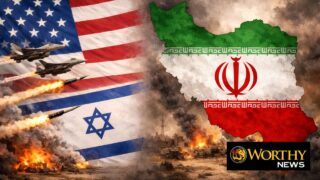
by Emmitt Barry, Worthy News Washington D.C. Bureau Chief
Trump Says Talks Continue as Tehran Threatens Hormuz, Demands Israel Halt Lebanon Offensive
(Worthy News) – Conflicting messages from Washington and Tehran left the future of the Iran war uncertain Monday, as President Donald Trump said talks with the Islamic Republic were still moving forward even after Iranian state media reported that Tehran had suspended indirect negotiations over Israel’s expanding offensive against Hezbollah in Lebanon.
The contradiction underscored the fragile and increasingly murky state of the April ceasefire between the United States and Iran. On one side, Trump insisted diplomacy remained alive. On the other, Iranian officials threatened to close the Strait of Hormuz, activate pressure along other strategic waterways, and halt talks unless Israel stops its military operations in Lebanon and Gaza.
“Talks are continuing, at a rapid pace, with the Islamic Republic of Iran,” Trump wrote Monday on Truth Social, according to reports from Reuters and CBS News.
Yet Iran’s semi-official Tasnim News Agency, which is affiliated with the Islamic Revolutionary Guard Corps, reported that Tehran had suspended “discussions and exchanges of texts through intermediaries” because of Israel’s ongoing operations in Lebanon. Reuters reported that Iran said it was stopping message exchanges with Washington and could move to block the Strait of Hormuz, one of the world’s most critical oil shipping chokepoints.
The diplomatic confusion came as the war showed few signs of slowing. Iranian officials accused the United States and Israel of violating the April ceasefire, arguing that the agreement applied not only to direct U.S.-Iran fighting but also to Iran-backed fronts across the region, including Lebanon.
Iranian Foreign Minister Abbas Araghchi wrote Monday on X that “the ceasefire between Iran and the U.S. is unequivocally a ceasefire on all fronts, including in Lebanon.”
“Its violation on one front is a violation of the ceasefire on all fronts,” Araghchi added. “The U.S. and Israel are responsible for the consequences of any violation.”
Tehran’s position is clear: Israel’s campaign against Hezbollah must stop before meaningful talks can resume. Washington’s position is far less clear. Trump told NBC News that Iran had not informed him it was suspending talks and suggested he was prepared to let the process go quiet for a while.
“I think we’ve been talking too much if you want to know the truth,” Trump said, according to Reuters. “I think going silent would be very good, and that could be for a long time.”
In a separate interview with CNBC, Trump appeared even less concerned about whether negotiations survived.
“I don’t care if they’re over, honestly … I couldn’t care less,” Trump said.
Still, shortly after those remarks were reported, the president posted that talks were continuing at a rapid pace, leaving diplomats, allies, and adversaries to read between the lines.
The mixed signals are unfolding against a widening regional conflict. Israel has pressed deeper into southern Lebanon after months of missile and drone attacks from Hezbollah, the Iranian-financed terrorist organization. The Israel Defense Forces said troops captured the strategic Beaufort Ridge near Nabatieh, marking Israel’s deepest incursion into Lebanon since 2000. The IDF said the operation was aimed at degrading Hezbollah infrastructure and protecting northern Israeli communities.
The Israeli military also announced that it had eliminated Hezbollah missile-array commander Mohammed Mousa Mteirek in the Nabatieh area on Sunday.
Iran, meanwhile, has sought to turn the Lebanon front into a central condition of the broader ceasefire. Mohammad Mokhber, a member of Iran’s Expediency Discernment Council and an adviser to Supreme Leader Ayatollah Mojtaba Khamenei, said after meeting Hezbollah envoy Abdullah Safi al-Din in Tehran that any ceasefire failing to account for Iran’s allied groups was irrelevant.
Mohsen Rezaei, a former Islamic Revolutionary Guard Corps commander and senior adviser to Khamenei, issued a similar warning.
“We will not allow the maritime blockade to continue, and an escalation of tensions in Lebanon will not be tolerated. The patience of the armed forces of the Islamic Republic of Iran has its limits,” Rezaei wrote Monday on X.
Iranian officials have also threatened to maintain the closure of the Strait of Hormuz and apply pressure near the Bab el-Mandeb Strait, the narrow passage connecting the Red Sea to the Gulf of Aden. Tasnim reported that Tehran and its allies are considering such steps as part of a broader campaign to punish Israel and its supporters.
That threat raises the stakes far beyond the battlefield. The Strait of Hormuz is a vital artery for global energy markets, while the Bab el-Mandeb has already been destabilized by Iran-backed Houthi attacks against international shipping. If Tehran follows through, the conflict could shift from a regional military crisis into a global economic shock.
The battlefield also remained active between the United States and Iran. Over the weekend, Iranian forces reportedly shot down a U.S. MQ-1 Predator drone, and the U.S. responded by striking Iranian drone command-and-control and radar sites. Iran later launched attacks toward Kuwait, a close U.S. partner in the Gulf region, further straining the already battered ceasefire.
For Trump, the dilemma is becoming sharper. The administration is trying to keep diplomatic channels open while maintaining a naval blockade of Iranian ports and supporting Israel’s effort to neutralize Hezbollah. Iran, however, is attempting to redefine the ceasefire as a regionwide umbrella protecting its proxy network from Israeli retaliation.
The result is a war suspended somewhere between negotiation and escalation. Trump says talks continue. Tehran says talks are suspended. Israel is still advancing in Lebanon. Iran is threatening the world’s shipping lanes. And the April ceasefire appears to be alive only in the language of diplomacy, not in the reality of the battlefield.
For Israel, the issue remains direct and immediate: Hezbollah’s missiles and drones have kept northern Israeli communities under threat, and Jerusalem has made clear it will not allow Iran’s proxy army to remain entrenched along its border. For Iran, Lebanon has become both a pressure point and a shield for Hezbollah. For Washington, the question now is whether diplomatic ambiguity can prevent a wider war—or whether mixed signals are only delaying the next major escalation.
Copyright 1999-2026 Worthy News. This article was originally published on Worthy News and was reproduced with permission.
[worthy_plugins_news_story_title]
<div style="text-align:right; padding:0px 0px 10px 15px; float:right; width:300px;"><img src="[worthy_plugins_news_story_image name=sm_medium]" alt="" /></div>[worthy_plugins_news_story_body]