by Emmitt Barry, Worthy News Washington D.C. Bureau Chief
(Worthy News) – Senior U.S. naval commanders are warning that China’s rapidly expanding submarine force presents a mounting strategic challenge, as Beijing develops next-generation ballistic missile submarines capable of striking larger portions of the U.S. mainland from waters closer to its own shores, the Wall Street Journal reported.
In testimony before the U.S.-China Economic and Security Review Commission, Vice Adm. Richard Seif said China’s growing undersea capabilities “represent a serious challenge,” citing advanced technologies that could erode America’s longstanding dominance beneath the seas. Rear Adm. Mike Brookes, director of U.S. Navy intelligence, projected that by 2040 China’s undersea forces “may credibly challenge U.S. regional maritime dominance.”
At the center of concern is China’s anticipated Type 096 ballistic missile submarine, expected to carry longer-range and more accurate missiles. Brookes testified that the platform would allow Beijing to “target large portions of the U.S. from protected waters,” significantly enhancing its nuclear deterrent. This marks a step beyond China’s current submarines, which are largely limited to targeting portions of the U.S. from within the first island chain.
China has dramatically expanded its submarine production capacity, accelerating output from less than one nuclear-powered submarine per year to significantly higher rates. Pentagon projections estimate Beijing’s fleet could reach 80 submarines by 2035, roughly half of them nuclear-powered — up from today’s force of more than 60 vessels, many of them diesel-powered and more limited in range.
While China already fields the world’s largest navy by ship count, U.S. analysts note that undersea warfare has long been a key American advantage. That edge, however, is narrowing as Chinese submarines grow quieter, faster, and more survivable.
Beijing is also investing heavily in seabed sensors, unmanned systems, and underwater monitoring infrastructure — sometimes described as an “Underwater Great Wall” — designed to create layered defenses and complicate U.S. naval operations in the Western Pacific.
Looking ahead, U.S. intelligence expects China to extend routine submarine patrols into the Indian Ocean, Arctic, and even the Atlantic by 2040, signaling ambitions for a true blue-water navy. As Washington works to strengthen alliances such as AUKUS and rebuild its own submarine production, military leaders say control of the undersea domain will remain central to deterrence and the defense of the American homeland.
Copyright 1999-2026 Worthy News. This article was originally published on Worthy News and was reproduced with permission.
The following code is how the above article is generated with the Worthy Suite WordPress Plugin.
[worthy_plugins_news_story_body]This is how you display a story with an image.
U.S. Warns of China’s Expanding Submarine Threat
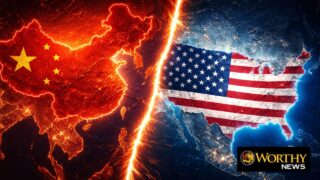
by Emmitt Barry, Worthy News Washington D.C. Bureau Chief
(Worthy News) – Senior U.S. naval commanders are warning that China’s rapidly expanding submarine force presents a mounting strategic challenge, as Beijing develops next-generation ballistic missile submarines capable of striking larger portions of the U.S. mainland from waters closer to its own shores, the Wall Street Journal reported.
In testimony before the U.S.-China Economic and Security Review Commission, Vice Adm. Richard Seif said China’s growing undersea capabilities “represent a serious challenge,” citing advanced technologies that could erode America’s longstanding dominance beneath the seas. Rear Adm. Mike Brookes, director of U.S. Navy intelligence, projected that by 2040 China’s undersea forces “may credibly challenge U.S. regional maritime dominance.”
At the center of concern is China’s anticipated Type 096 ballistic missile submarine, expected to carry longer-range and more accurate missiles. Brookes testified that the platform would allow Beijing to “target large portions of the U.S. from protected waters,” significantly enhancing its nuclear deterrent. This marks a step beyond China’s current submarines, which are largely limited to targeting portions of the U.S. from within the first island chain.
China has dramatically expanded its submarine production capacity, accelerating output from less than one nuclear-powered submarine per year to significantly higher rates. Pentagon projections estimate Beijing’s fleet could reach 80 submarines by 2035, roughly half of them nuclear-powered — up from today’s force of more than 60 vessels, many of them diesel-powered and more limited in range.
While China already fields the world’s largest navy by ship count, U.S. analysts note that undersea warfare has long been a key American advantage. That edge, however, is narrowing as Chinese submarines grow quieter, faster, and more survivable.
Beijing is also investing heavily in seabed sensors, unmanned systems, and underwater monitoring infrastructure — sometimes described as an “Underwater Great Wall” — designed to create layered defenses and complicate U.S. naval operations in the Western Pacific.
Looking ahead, U.S. intelligence expects China to extend routine submarine patrols into the Indian Ocean, Arctic, and even the Atlantic by 2040, signaling ambitions for a true blue-water navy. As Washington works to strengthen alliances such as AUKUS and rebuild its own submarine production, military leaders say control of the undersea domain will remain central to deterrence and the defense of the American homeland.
Copyright 1999-2026 Worthy News. This article was originally published on Worthy News and was reproduced with permission.
[worthy_plugins_news_story_title]
<div style="text-align:right; padding:0px 0px 10px 15px; float:right; width:300px;"><img src="[worthy_plugins_news_story_image name=sm_medium]" alt="" /></div>[worthy_plugins_news_story_body]