by Emmitt Barry, Worthy News Washington D.C. Bureau Chief
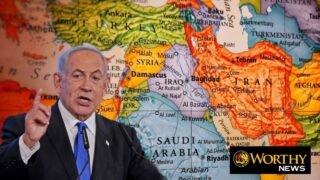
JERUSALEM/WASHINGTON, D.C. (Worthy News) – Israeli Prime Minister Benjamin Netanyahu vowed Monday night that Iran will not be allowed to acquire nuclear weapons, even as President Donald Trump moves forward with a U.S.-Iran memorandum of understanding aimed at ending the war and reopening the Strait of Hormuz.
“With an agreement or without an agreement, Iran will not have nuclear weapons — not today and not tomorrow,” Netanyahu told reporters in his first press conference in three months. “As long as I am prime minister of Israel, it will not happen.”
Netanyahu said the weeks-long U.S.-Israeli campaign against Iran had “saved the State of Israel from annihilation,” arguing that Tehran was moving toward an immediate nuclear threat before the operation began. He described the offensive as the largest strike operation in Israel’s history, saying Israeli and American forces targeted Iran’s nuclear infrastructure, missile factories, military industries, air force, navy and senior regime figures.
“All of us were exposed to that danger, and we pushed that threat back for years,” Netanyahu said. “Had we not acted, Iran would already have nuclear bombs.”
The Israeli leader also acknowledged that Israel does not yet know the full details of the U.S.-Iran deal, which is expected to be formally signed Friday in Switzerland. Netanyahu declined to criticize Trump directly, saying the two leaders often agree but do not always see “eye to eye.”
“He is the U.S. president, I’m the Israeli prime minister,” Netanyahu said. “I am responsible for Israel’s security interests. I stand up for them.”
Vice President JD Vance said Monday the agreement is “performance-based” and contingent on Iran giving up its nuclear weapons program and ending support for terrorist activity across the Middle East. Reuters reported that Vance said no funds would be released to Iran merely for signing the deal, and sanctions relief would depend on verified Iranian compliance.
ABC News reported that the memorandum is expected to create a 60-day halt in fighting while technical negotiations continue, with the Strait of Hormuz expected to reopen to all traffic.
Still, Netanyahu stressed that Israel is not a party to the agreement and will not bind itself to any arrangement that leaves Tehran on a path to nuclear weapons. He said any diplomatic framework must be backed by a credible military threat, arguing that this was the central failure of the 2015 Iran nuclear deal.
“The struggle is not over,” Netanyahu warned, citing continuing threats from Iran-backed forces in Lebanon, Yemen, Syria, Judea and Samaria, and the Gaza Strip.
On Lebanon, Netanyahu said Israeli forces would remain in the southern buffer zone “for as long as necessary,” adding that Hezbollah has been severely weakened.
“We broke the Iranian axis, the Iranian terror axis, and Hezbollah is a shadow of what it used to be,” he said.
Netanyahu said Israel is now “stronger than ever” and positioned for new regional alliances, but he made clear that Jerusalem’s red line remains unchanged: Iran must never be allowed to cross the nuclear threshold.
Copyright 1999-2026 Worthy News. This article was originally published on Worthy News and was reproduced with permission.
The following code is how the above article is generated with the Worthy Suite WordPress Plugin.
[worthy_plugins_news_story_body]This is how you display a story with an image.
Netanyahu Vows Iran Will Not Get Nuclear Weapons ‘With Or Without An Agreement’
by Emmitt Barry, Worthy News Washington D.C. Bureau Chief
JERUSALEM/WASHINGTON, D.C. (Worthy News) – Israeli Prime Minister Benjamin Netanyahu vowed Monday night that Iran will not be allowed to acquire nuclear weapons, even as President Donald Trump moves forward with a U.S.-Iran memorandum of understanding aimed at ending the war and reopening the Strait of Hormuz.
“With an agreement or without an agreement, Iran will not have nuclear weapons — not today and not tomorrow,” Netanyahu told reporters in his first press conference in three months. “As long as I am prime minister of Israel, it will not happen.”
Netanyahu said the weeks-long U.S.-Israeli campaign against Iran had “saved the State of Israel from annihilation,” arguing that Tehran was moving toward an immediate nuclear threat before the operation began. He described the offensive as the largest strike operation in Israel’s history, saying Israeli and American forces targeted Iran’s nuclear infrastructure, missile factories, military industries, air force, navy and senior regime figures.
“All of us were exposed to that danger, and we pushed that threat back for years,” Netanyahu said. “Had we not acted, Iran would already have nuclear bombs.”
The Israeli leader also acknowledged that Israel does not yet know the full details of the U.S.-Iran deal, which is expected to be formally signed Friday in Switzerland. Netanyahu declined to criticize Trump directly, saying the two leaders often agree but do not always see “eye to eye.”
“He is the U.S. president, I’m the Israeli prime minister,” Netanyahu said. “I am responsible for Israel’s security interests. I stand up for them.”
Vice President JD Vance said Monday the agreement is “performance-based” and contingent on Iran giving up its nuclear weapons program and ending support for terrorist activity across the Middle East. Reuters reported that Vance said no funds would be released to Iran merely for signing the deal, and sanctions relief would depend on verified Iranian compliance.
ABC News reported that the memorandum is expected to create a 60-day halt in fighting while technical negotiations continue, with the Strait of Hormuz expected to reopen to all traffic.
Still, Netanyahu stressed that Israel is not a party to the agreement and will not bind itself to any arrangement that leaves Tehran on a path to nuclear weapons. He said any diplomatic framework must be backed by a credible military threat, arguing that this was the central failure of the 2015 Iran nuclear deal.
“The struggle is not over,” Netanyahu warned, citing continuing threats from Iran-backed forces in Lebanon, Yemen, Syria, Judea and Samaria, and the Gaza Strip.
On Lebanon, Netanyahu said Israeli forces would remain in the southern buffer zone “for as long as necessary,” adding that Hezbollah has been severely weakened.
“We broke the Iranian axis, the Iranian terror axis, and Hezbollah is a shadow of what it used to be,” he said.
Netanyahu said Israel is now “stronger than ever” and positioned for new regional alliances, but he made clear that Jerusalem’s red line remains unchanged: Iran must never be allowed to cross the nuclear threshold.
Copyright 1999-2026 Worthy News. This article was originally published on Worthy News and was reproduced with permission.
[worthy_plugins_news_story_title]
<div style="text-align:right; padding:0px 0px 10px 15px; float:right; width:300px;"><img src="[worthy_plugins_news_story_image name=sm_medium]" alt="" /></div>[worthy_plugins_news_story_body]