President warns powerful military action could resume if negotiations fail
by Emmitt Barry, Worthy News Washington D.C. Bureau Chief
WASHINGTON (Worthy News) – President Donald Trump said Monday that Iran is seeking negotiations after two weeks of sustained American airstrikes, portraying Tehran’s diplomatic outreach as evidence that the U.S. military campaign has forced the Islamic regime back to the bargaining table.
“They’re begging to make a deal,” Trump told reporters, according to The Washington Times. The president said negotiations were progressing well but warned that American forces remain prepared to resume attacks if Iran refuses to accept an agreement.
Trump paused planned strikes over the weekend to allow mediators an opportunity to advance talks aimed at ending the latest round of fighting. “We’re having good talks,” the president said, while stressing that no final agreement has been reached.
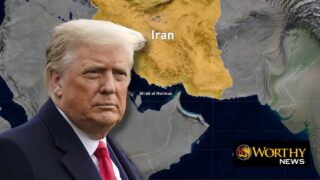
The discussions reportedly involve diplomatic efforts by Qatar, Pakistan, Egypt and Oman, with negotiations focused heavily on restoring unrestricted commercial navigation through the Strait of Hormuz. The strategic waterway carries a substantial share of the world’s oil supplies and has become one of the central pressure points in the conflict.
Iran has publicly denied that it is directly negotiating with Washington. Iranian officials insist Tehran still controls the Strait of Hormuz and has reportedly turned away several commercial vessels that it said lacked authorization to pass. However, mediators have described the indirect talks as making significant progress.
Trump said he suspended further attacks after regional governments requested additional time for diplomacy. He maintained that the pause cost the United States nothing while giving Iran a final opportunity to avoid renewed military action.
The president told Axios that he is prepared to authorize “strong military action” if negotiations collapse. The warning follows a two-week U.S. bombing campaign that struck Iranian military facilities, command centers and infrastructure connected to Tehran’s regional operations.
Despite the pause in American strikes, tensions remain high across the Middle East. Drones have targeted or crossed the airspace of Saudi Arabia, Jordan and Iraq, while Iran-backed forces in Yemen and Iraq continue threatening American allies and regional energy infrastructure.
Oil prices fell sharply following news that the bombing campaign had paused and that negotiations were advancing. Still, unresolved disputes over Iran’s nuclear program, control of the Strait of Hormuz and Tehran’s support for regional terrorist proxies could quickly derail the emerging diplomatic opening.
Israeli Prime Minister Benjamin Netanyahu is expected to meet Trump at the White House on Tuesday, with Iran, regional security and the possibility of a broader peace agreement expected to dominate the discussions. Israel has supported efforts to prevent Iran from obtaining nuclear weapons while maintaining that Tehran’s regime cannot be trusted without firm enforcement measures.
For Trump, the negotiations represent another test of his “peace through strength” doctrine—the belief that decisive American military pressure can compel hostile governments to negotiate. Whether Iran is prepared to make lasting concessions, however, remains uncertain.
Copyright 1999-2026 Worthy News. This article was originally published on Worthy News and was reproduced with permission.
The following code is how the above article is generated with the Worthy Suite WordPress Plugin.
[worthy_plugins_news_story_body]This is how you display a story with an image.
Trump Says Iran Is ‘Begging’ for Peace Talks After Two Weeks of U.S. Bombing
President warns powerful military action could resume if negotiations fail
by Emmitt Barry, Worthy News Washington D.C. Bureau Chief
WASHINGTON (Worthy News) – President Donald Trump said Monday that Iran is seeking negotiations after two weeks of sustained American airstrikes, portraying Tehran’s diplomatic outreach as evidence that the U.S. military campaign has forced the Islamic regime back to the bargaining table.
“They’re begging to make a deal,” Trump told reporters, according to The Washington Times. The president said negotiations were progressing well but warned that American forces remain prepared to resume attacks if Iran refuses to accept an agreement.
Trump paused planned strikes over the weekend to allow mediators an opportunity to advance talks aimed at ending the latest round of fighting. “We’re having good talks,” the president said, while stressing that no final agreement has been reached.
The discussions reportedly involve diplomatic efforts by Qatar, Pakistan, Egypt and Oman, with negotiations focused heavily on restoring unrestricted commercial navigation through the Strait of Hormuz. The strategic waterway carries a substantial share of the world’s oil supplies and has become one of the central pressure points in the conflict.
Iran has publicly denied that it is directly negotiating with Washington. Iranian officials insist Tehran still controls the Strait of Hormuz and has reportedly turned away several commercial vessels that it said lacked authorization to pass. However, mediators have described the indirect talks as making significant progress.
Trump said he suspended further attacks after regional governments requested additional time for diplomacy. He maintained that the pause cost the United States nothing while giving Iran a final opportunity to avoid renewed military action.
The president told Axios that he is prepared to authorize “strong military action” if negotiations collapse. The warning follows a two-week U.S. bombing campaign that struck Iranian military facilities, command centers and infrastructure connected to Tehran’s regional operations.
Despite the pause in American strikes, tensions remain high across the Middle East. Drones have targeted or crossed the airspace of Saudi Arabia, Jordan and Iraq, while Iran-backed forces in Yemen and Iraq continue threatening American allies and regional energy infrastructure.
Oil prices fell sharply following news that the bombing campaign had paused and that negotiations were advancing. Still, unresolved disputes over Iran’s nuclear program, control of the Strait of Hormuz and Tehran’s support for regional terrorist proxies could quickly derail the emerging diplomatic opening.
Israeli Prime Minister Benjamin Netanyahu is expected to meet Trump at the White House on Tuesday, with Iran, regional security and the possibility of a broader peace agreement expected to dominate the discussions. Israel has supported efforts to prevent Iran from obtaining nuclear weapons while maintaining that Tehran’s regime cannot be trusted without firm enforcement measures.
For Trump, the negotiations represent another test of his “peace through strength” doctrine—the belief that decisive American military pressure can compel hostile governments to negotiate. Whether Iran is prepared to make lasting concessions, however, remains uncertain.
Copyright 1999-2026 Worthy News. This article was originally published on Worthy News and was reproduced with permission.
[worthy_plugins_news_story_title]
<div style="text-align:right; padding:0px 0px 10px 15px; float:right; width:300px;"><img src="[worthy_plugins_news_story_image name=sm_medium]" alt="" /></div>[worthy_plugins_news_story_body]