CENTCOM targets Iranian command centers, missiles and coastal defenses as the Islamic Republic threatens to destroy regional infrastructure
by Emmitt Barry, Worthy News Washington D.C. Bureau Chief
WASHINGTON/JERUSALEM (Worthy News) – The United States carried out two waves of strikes against Iran on Wednesday, marking the fifth consecutive day of American attacks on military assets belonging to the Islamic regime as the battle for control of the Strait of Hormuz widened across the Middle East.
U.S. Central Command said the second operation ended at approximately 9 p.m. Eastern time after American forces struck Iranian command centers, air-defense installations, missile and drone capabilities, and coastal surveillance facilities at several locations, including the strategic port city of Bandar Abbas.
“CENTCOM used precision munitions to hit targets in multiple locations including Bandar Abbas,” the military said.
The operation was intended to further weaken Tehran’s ability to threaten commercial ships and their crews passing through the Strait of Hormuz, one of the world’s most important maritime energy corridors.
“The U.S. military is holding Iran accountable at the Commander in Chief’s direction,” CENTCOM said.
Rare Daytime Strikes Hit Iranian Island
The nighttime operation followed a rare series of daylight attacks earlier Wednesday that lasted roughly 90 minutes.
CENTCOM said those strikes targeted Iranian coastal-defense systems and cruise-missile storage and launch facilities on Greater Tunb Island in the Persian Gulf. The island sits near shipping lanes entering the Strait of Hormuz and has long served as a fortified Iranian military position.
The sustained American campaign reflects Washington’s effort to dismantle Iran’s ability to use missiles, drones, radar systems and coastal batteries to intimidate or attack civilian shipping.
The fighting has increasingly centered on the Strait of Hormuz, where Tehran has attempted to use military pressure against commercial traffic while the United States enforces its blockade of Iranian ports.
Iran Retaliates Against Three Arab Nations
Iran’s Islamic Revolutionary Guard Corps said it responded by launching missiles and drones against military facilities hosting American forces in Bahrain, Jordan and Kuwait.
The IRGC claimed its attack on Bahrain damaged an air-surveillance and control radar and a fuel-pumping facility serving fighter aircraft at Isa Air Base. Bahraini authorities confirmed that air-raid sirens were activated during the overnight attacks, although Iran’s claims of damage could not be independently verified.
In Jordan, the Guards claimed ballistic missiles struck an American fighter-jet ramp and a U.S. command-and-control facility at Al Azraq Air Base.
The Jordanian Armed Forces said its air defenses intercepted and destroyed eight Iranian missiles aimed at the kingdom.
Iran also said it targeted a C-RAM early-warning radar and an area housing U.S. troops at Kuwait’s Ali Al Salem Air Base.
Kuwait’s military confirmed that its air defenses were actively engaging hostile unmanned aerial vehicles but did not confirm the destruction claimed by Tehran.
The Iranian attacks place three U.S.-aligned Arab nations directly in the conflict and demonstrate Tehran’s willingness to strike neighboring countries that host American forces, even as those governments attempt to prevent a broader regional war.
Tehran Threatens Regional Destruction
Lt. Col. Ebrahim Zolfaghari, a spokesman for Iran’s Khatam al-Anbiya Central Headquarters, warned Thursday that Tehran would launch a far more destructive response if President Donald Trump expanded the campaign to include Iranian power plants, bridges and other infrastructure.
Zolfaghari threatened that “all infrastructure in the region” would be destroyed by Iran’s armed forces if Washington carried out those attacks.
He described any American intervention in the Strait of Hormuz as a red line for the Islamic Republic and warned that Tehran’s next response would be broader and more severe.
The threats underscore the danger facing Bahrain, Jordan, Kuwait and other nations that host American troops. Iran’s leadership is seeking to raise the cost of the U.S. campaign by threatening not only military installations but the civilian, transportation and energy infrastructure upon which the region depends.
Yet each Iranian attack risks strengthening the coalition gathering against the regime. Gulf nations that once sought to remain outside a direct confrontation are increasingly being forced to defend their own territory from Iranian missiles and drones.
Copyright 1999-2026 Worthy News. This article was originally published on Worthy News and was reproduced with permission.
The following code is how the above article is generated with the Worthy Suite WordPress Plugin.
[worthy_plugins_news_story_body]This is how you display a story with an image.
U.S. Strikes Iran for Fifth Straight Day as Tehran Attacks American Bases Across Gulf
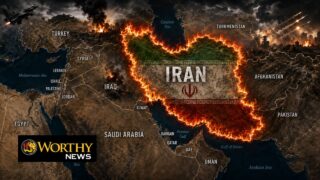
CENTCOM targets Iranian command centers, missiles and coastal defenses as the Islamic Republic threatens to destroy regional infrastructure
by Emmitt Barry, Worthy News Washington D.C. Bureau Chief
WASHINGTON/JERUSALEM (Worthy News) – The United States carried out two waves of strikes against Iran on Wednesday, marking the fifth consecutive day of American attacks on military assets belonging to the Islamic regime as the battle for control of the Strait of Hormuz widened across the Middle East.
U.S. Central Command said the second operation ended at approximately 9 p.m. Eastern time after American forces struck Iranian command centers, air-defense installations, missile and drone capabilities, and coastal surveillance facilities at several locations, including the strategic port city of Bandar Abbas.
“CENTCOM used precision munitions to hit targets in multiple locations including Bandar Abbas,” the military said.
The operation was intended to further weaken Tehran’s ability to threaten commercial ships and their crews passing through the Strait of Hormuz, one of the world’s most important maritime energy corridors.
“The U.S. military is holding Iran accountable at the Commander in Chief’s direction,” CENTCOM said.
Rare Daytime Strikes Hit Iranian Island
The nighttime operation followed a rare series of daylight attacks earlier Wednesday that lasted roughly 90 minutes.
CENTCOM said those strikes targeted Iranian coastal-defense systems and cruise-missile storage and launch facilities on Greater Tunb Island in the Persian Gulf. The island sits near shipping lanes entering the Strait of Hormuz and has long served as a fortified Iranian military position.
The sustained American campaign reflects Washington’s effort to dismantle Iran’s ability to use missiles, drones, radar systems and coastal batteries to intimidate or attack civilian shipping.
The fighting has increasingly centered on the Strait of Hormuz, where Tehran has attempted to use military pressure against commercial traffic while the United States enforces its blockade of Iranian ports.
Iran Retaliates Against Three Arab Nations
Iran’s Islamic Revolutionary Guard Corps said it responded by launching missiles and drones against military facilities hosting American forces in Bahrain, Jordan and Kuwait.
The IRGC claimed its attack on Bahrain damaged an air-surveillance and control radar and a fuel-pumping facility serving fighter aircraft at Isa Air Base. Bahraini authorities confirmed that air-raid sirens were activated during the overnight attacks, although Iran’s claims of damage could not be independently verified.
In Jordan, the Guards claimed ballistic missiles struck an American fighter-jet ramp and a U.S. command-and-control facility at Al Azraq Air Base.
The Jordanian Armed Forces said its air defenses intercepted and destroyed eight Iranian missiles aimed at the kingdom.
Iran also said it targeted a C-RAM early-warning radar and an area housing U.S. troops at Kuwait’s Ali Al Salem Air Base.
Kuwait’s military confirmed that its air defenses were actively engaging hostile unmanned aerial vehicles but did not confirm the destruction claimed by Tehran.
The Iranian attacks place three U.S.-aligned Arab nations directly in the conflict and demonstrate Tehran’s willingness to strike neighboring countries that host American forces, even as those governments attempt to prevent a broader regional war.
Tehran Threatens Regional Destruction
Lt. Col. Ebrahim Zolfaghari, a spokesman for Iran’s Khatam al-Anbiya Central Headquarters, warned Thursday that Tehran would launch a far more destructive response if President Donald Trump expanded the campaign to include Iranian power plants, bridges and other infrastructure.
Zolfaghari threatened that “all infrastructure in the region” would be destroyed by Iran’s armed forces if Washington carried out those attacks.
He described any American intervention in the Strait of Hormuz as a red line for the Islamic Republic and warned that Tehran’s next response would be broader and more severe.
The threats underscore the danger facing Bahrain, Jordan, Kuwait and other nations that host American troops. Iran’s leadership is seeking to raise the cost of the U.S. campaign by threatening not only military installations but the civilian, transportation and energy infrastructure upon which the region depends.
Yet each Iranian attack risks strengthening the coalition gathering against the regime. Gulf nations that once sought to remain outside a direct confrontation are increasingly being forced to defend their own territory from Iranian missiles and drones.
Copyright 1999-2026 Worthy News. This article was originally published on Worthy News and was reproduced with permission.
[worthy_plugins_news_story_title]
<div style="text-align:right; padding:0px 0px 10px 15px; float:right; width:300px;"><img src="[worthy_plugins_news_story_image name=sm_medium]" alt="" /></div>[worthy_plugins_news_story_body]