Worthy News
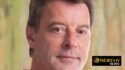
Wim de Goeij, a former Jehovah’s Witness who became a prominent Dutch publisher of Bible-teaching materials and outspoken critic of the Watch Tower Society, has died. He was 64.
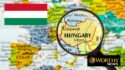
Hungary’s Parliament elected former Supreme Court President András Baka as the nation’s new president Tuesday, marking a dramatic political comeback for a judge removed from office under former Prime Minister Viktor Orbán.

Massachusetts Gov. Maura Healey has signed legislation removing the state’s previous statutory restrictions governing abortions after 24 weeks of pregnancy, prompting pro-life leaders to warn that the new standard effectively permits abortions throughout pregnancy based on a physician’s professional judgment.

The United States has successfully conducted two closely guarded tests of President Donald Trump’s ambitious Golden Dome missile defense system, marking significant progress toward building a nationwide shield capable of defending the American homeland against ballistic, hypersonic, cruise missile and other advanced aerial threats.
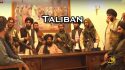
Five years after the Taliban returned to power, an estimated 2.4 million Afghan girls remain barred from secondary education, marking one of the most sweeping reversals of women’s rights anywhere in the world.

A Christian motorist in Britain is considering legal action after his insurer reportedly told him that his car insurance could not continue unless he removed handmade “Jesus Loves You” messages from his vehicle.

Israel and Venezuela have agreed to renew consular relations for the first time since diplomatic ties were severed in 2009, marking another significant diplomatic development for Jerusalem in Latin America.
Colombia has formally recognized Israeli sovereignty over the Golan Heights, becoming only the second nation in the world after the United States to do so.
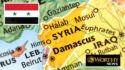
The International Atomic Energy Agency is expected to remove nuclear material from a clandestine site in Syria under a secret agreement brokered by the Trump administration between Israel and Syria, according to reports Monday.

Syria and Russia have reached an agreement that will strip Moscow of exclusive control over two strategic military bases on Syria’s Mediterranean coast, marking a major shift in Russia’s Middle East military presence following the collapse of the Bashar al-Assad government.
This is the code to run Worthy News with Pagination which allows for archive pages.
[worthy_plugins_news_stories detail_page_uri="/worthy-news/" excerpts=true limit=10 pager=true image=thumbnail image_position=left]Worthy Devotions
In the age of social media, where hot takes go viral, outrage spreads in seconds, and comment sections become battlegrounds, James offers a divine pattern that stands in stark contrast to the digital frenzy. His instruction is timeless but urgently needed today: be quick to listen, slow to speak, and slow to anger. These three commands — revolutionary yet straightforward — cut through the noise of our reaction-driven culture and call us to a Spirit-led posture in a screen-lit world.
In Matthew 21, Yeshua (Jesus) approached a fig tree full of leaves but found no fruit. He cursed it, and it withered. This dramatic act was not about the tree—it was about Israel. The fig tree had the appearance of life, but it lacked the substance of transformation. It was a warning to a nation full of religion but void of repentance. The tree became a symbol of spiritual barrenness, of form without fruit.
The parable of the fig tree is not just a message to observers — it’s a summons to the faithful. The fig tree puts out its leaves first, then comes the fruit. Spiritually, that’s a call to live in readiness even before the final harvest arrives. Yeshua (Jesus) tells His disciples, “Be ready, for the Son of Man is coming at an hour you do not expect” (Matthew 24:44).
Among all fruit-bearing trees, the fig tree is uniquely prophetic–because it is one of the few that produces two harvests in a single growing season. First comes the early crop in spring, known in Scripture as the “first ripe fig” (Isaiah 28:4), and then a second, more abundant harvest in late summer or early fall. This uncommon pattern is a living picture of prophecy woven into the fabric of creation.
Yeshua (Jesus) didn’t merely offer a suggestion–He issued a command: “Learn the parable.” In Greek, the word manthano (μανθάνω) implies disciplined learning, not casual observation. In Hebraic thought, to “learn” a parable means to press into its hidden meaning until it transforms how you live. The fig tree is not just a poetic image–it’s a prophetic mandate. And Yeshua expected His disciples, including us, to understand it deeply.
Yeshua (Jesus) used the fig tree—a familiar symbol in Israel’s botanical and prophetic world—as a teaching tool to awaken spiritual discernment. The fig tree, known for losing all its leaves in winter and budding again in spring, became a natural signpost to mark the changing seasons. In the same way, Jesus gave His disciples prophetic markers to discern a coming shift: wars, famines, false messiahs, persecution, lawlessness, and the global preaching of the gospel (Matthew 24:4–14).
On July 4th, America remembers a bold declaration — a break from tyranny, a longing for a better government, and the birth of a nation built on liberty. The Founders risked everything to establish a new way of life, one where freedom could flourish. Their cry was clear: “We will no longer be ruled by kings who oppress–we will be governed by laws that reflect liberty and justice.”
In a world full of uncertainty, this verse from Romans stands like a lighthouse in the storm: “The God of hope…” Not just the God who gives hope, but the very source of it. When everything around us seems shaken — economies falter, nations rage, relationships strain — it is the God of hope who remains unshaken and unchanging.
When Yeshua (Jesus) spoke these words not only to the seventy He sent ahead of Him, but to every disciple who follows Him into the world, it’s a striking picture: fields overflowing with a harvest, ready to be gathered. The problem isn’t the readiness of the harvest — it’s the shortage of workers willing to go.
This piercing question opens Psalm 11 like a cry from the heart in troubled times. It’s a question we ask when law and order collapse, when truth is ridiculed, and when those who do evil seem to triumph. The foundations — the principles of righteousness, justice, and truth that uphold society — are under siege. And it begs the question: What can God’s people do when everything righteous seems to be crumbling?
This is the code to run Worthy Devotions with Pagination which allows for archive pages.
[worthy_plugins_devotion_list detail_page_uri="/worthy-devotions/" excerpts=true limit=10 pager=true]