Exodus 12:13 Now the blood shall be a sign (Hebrew word – OHT) for you on the houses where you are. And when I see the blood, I will pass over you; and the plague shall not be on you to destroy you when I strike the land of Egypt.
As we discussed, the word for “sign” in ancient Hebrew is “oht”. It was used in Genesis to designate God’s covenant sign with Noah, (the rainbow). And we see now the same word again, in Exodus, identified with the deliverance of the Jewish people from the tenth plague, when the angel of death passed through all Egypt to strike the firstborn. Anyone under the “sign” of the blood was spared.
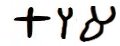
This “sign” of deliverance for the ancient Israelites, spelled “aleph”-“vav”-“tav” in ancient Hebrew letters, explicitly, the sign of blood on doorposts and lintel, also clearly spells out, “leader”, “nail”, and “cross”. Just as blood on the doorposts was the only sign of deliverance for Israel, the cross of the Messiah Yeshua (Jesus, the Christ), is the only sign of deliverance from eternal death for all mankind. [Acts 4:12]
The mystery of salvation was originally revealed in the very letters God used to unfold its story. In the ancient Hebrew He speaks to us from the beginning of time, that the sign of the covenant would be “the leader who was nailed to the cross”. Be in awe of the Father’s love for us!
Copyright 1999-2026 Worthy Devotions. This devotional was originally published on Worthy Devotions and was reproduced with permission.
How to display the above article within the Worthy Suite WordPress Plugin.
[worthy_plugins_devotion_single_body]There is something deeply intentional in God’s instruction concerning the lamb. He does not tell Israel to take a lamb at the last moment — He commands them to choose it on the 10th day of Nisan, set it apart, and live with it until the 14th day. This was not random timing; it was divine design.
There is something deeply powerful in the way God introduces Passover (Pesach) in Exodus. He does not begin with a list of instructions. He begins with divine intervention. Israel is enslaved, bound under Pharaoh, and crushed beneath a system they have no power to escape. Yet right in the middle of that helplessness, God speaks: “This month shall be for you the beginning of months.”
Yeshua (Jesus) does not conclude this parable with separation alone — He brings it to its true climax in glory. After the harvest, after the revealing, after everything has been set in its proper place, He lifts our eyes beyond the process and into the purpose with a powerful promise: the righteous will shine. This is the heart of the harvest — not merely the removal of what does not belong, but the unveiling of what truly does.
Yeshua (Jesus) brings this parable to a decisive and unavoidable climax: a moment is coming when everything in the field will be uncovered for what it truly is. The harvest is not merely the end of a process — it is the unveiling. What has been growing quietly over time will suddenly stand in full clarity, with no room left for confusion, assumption, or misjudgment. In that moment, the distinction will be undeniable.
There is something deeply instructive in the restraint of the Lord. When the servants recognize the problem in the field, their instinct is immediate action. They want to fix it, remove it, clean it up. But the Lord responds in a way that challenges human urgency. He tells them to wait.
There is a deeper layer in this parable that moves beyond simply identifying the difference between wheat and tares. Yeshua (Jesus) is not only revealing that the tare looks like wheat — He is warning that what it produces has the power to affect those who partake of it. The issue is not just imitation; it is ingestion. It is not only what is growing in the field, but what is being received into the heart.
With so much disinformation and so many voices speaking into our lives, people often ask for my thoughts on who to trust and what to believe. In light of that, I believe it’s time to step into a deeper kind of discernment — becoming what I would call a fruit inspector. This series is born out of that burden: to learn how to recognize the difference between the wheat and the tares.