by Stefan J. Bos, Worthy News Chief International Correspondent
BEIJING/MANILA (Worthy News) – China and the Philippines have accused each other of provoking a violent confrontation in contested South China Sea waters.
Manila said one of its navy personnel was struck on the head Monday, while Beijing insisted the Philippines had provoked the confrontation.
Chinese Coast Guard personnel and Philippine Navy sailors reportedly confronted each other with oars and wooden batons near the Second Thomas Shoal, a disputed reef where the two countries have repeatedly clashed in recent years.
The Philippines maintains a military outpost aboard the grounded warship BRP Sierra Madre, which serves as its outpost in the contested waters.
SOUTH CHINA SEA STANDOFF
Philippine military officials said Chinese Coast Guard personnel approached the outpost and reacted violently after Filipino sailors moved to escort them away.
“We call on the People’s Liberation Army and the China Coast Guard, including their maritime militia, to put a stop to their illegal, coercive, aggressive and deceptive actions within the West Philippine Sea and adhere to the 2016 Arbitral Award that affirms the Philippines’ lawful maritime rights under international law,” the Armed Forces of the Philippines said in a statement.
China swiftly rejected Manila’s account.
“The Philippine side provoked the incident first,” China’s Foreign Ministry said, alleging Philippine personnel approached a Chinese vessel in rubber boats before “turning around and making counter-accusations, distorting the facts and engaging in malicious hype.”
CHINA REJECTS CLAIMS
China’s Coast Guard said Philippine personnel ignored repeated warnings, rammed one of its patrol boats and “first used paddles, wooden poles and other implements to aggressively attack Chinese law enforcement officers.” It said its personnel responded with warnings and “proportionate countermeasures” while exercising “the utmost restraint.”
The Philippine Defense Ministry rejected Beijing’s account, describing the latest confrontation as part of “a clear pattern of provocative and hostile behaviour” by China.
The diplomatic dispute quickly escalated.
China summoned Philippine Ambassador Jaime FlorCruz in Beijing to lodge a formal protest, while the Philippines summoned Chinese Ambassador Jing Quan in Manila over the incident.
REGIONAL TENSIONS
The confrontation comes as foreign ministers from the Association of Southeast Asian Nations (ASEAN) gather in Manila for high-level security talks, where tensions in the South China Sea are expected to feature prominently alongside other regional security challenges.
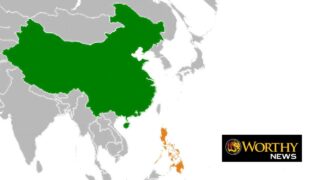
China claims almost the entire South China Sea despite competing territorial claims by the Philippines, Vietnam, Malaysia, Brunei and Taiwan.
The strategic waterway carries trillions of dollars in global trade annually and remains one of the world’s most important maritime corridors.
Monday’s latest violent encounter underscored the growing risk of further clashes in the South China Sea, where competing territorial claims have repeatedly brought Chinese and Philippine forces into dangerous close-range encounters.
Copyright 1999-2026 Worthy News. This article was originally published on Worthy News and was reproduced with permission.
The following code is how the above article is generated with the Worthy Suite WordPress Plugin.
[worthy_plugins_news_story_body]This is how you display a story with an image.
China, Philippines Trade Blame After Violent South China Sea Clash
by Stefan J. Bos, Worthy News Chief International Correspondent
BEIJING/MANILA (Worthy News) – China and the Philippines have accused each other of provoking a violent confrontation in contested South China Sea waters.
Manila said one of its navy personnel was struck on the head Monday, while Beijing insisted the Philippines had provoked the confrontation.
Chinese Coast Guard personnel and Philippine Navy sailors reportedly confronted each other with oars and wooden batons near the Second Thomas Shoal, a disputed reef where the two countries have repeatedly clashed in recent years.
The Philippines maintains a military outpost aboard the grounded warship BRP Sierra Madre, which serves as its outpost in the contested waters.
SOUTH CHINA SEA STANDOFF
Philippine military officials said Chinese Coast Guard personnel approached the outpost and reacted violently after Filipino sailors moved to escort them away.
“We call on the People’s Liberation Army and the China Coast Guard, including their maritime militia, to put a stop to their illegal, coercive, aggressive and deceptive actions within the West Philippine Sea and adhere to the 2016 Arbitral Award that affirms the Philippines’ lawful maritime rights under international law,” the Armed Forces of the Philippines said in a statement.
China swiftly rejected Manila’s account.
“The Philippine side provoked the incident first,” China’s Foreign Ministry said, alleging Philippine personnel approached a Chinese vessel in rubber boats before “turning around and making counter-accusations, distorting the facts and engaging in malicious hype.”
CHINA REJECTS CLAIMS
China’s Coast Guard said Philippine personnel ignored repeated warnings, rammed one of its patrol boats and “first used paddles, wooden poles and other implements to aggressively attack Chinese law enforcement officers.” It said its personnel responded with warnings and “proportionate countermeasures” while exercising “the utmost restraint.”
The Philippine Defense Ministry rejected Beijing’s account, describing the latest confrontation as part of “a clear pattern of provocative and hostile behaviour” by China.
The diplomatic dispute quickly escalated.
China summoned Philippine Ambassador Jaime FlorCruz in Beijing to lodge a formal protest, while the Philippines summoned Chinese Ambassador Jing Quan in Manila over the incident.
REGIONAL TENSIONS
The confrontation comes as foreign ministers from the Association of Southeast Asian Nations (ASEAN) gather in Manila for high-level security talks, where tensions in the South China Sea are expected to feature prominently alongside other regional security challenges.
China claims almost the entire South China Sea despite competing territorial claims by the Philippines, Vietnam, Malaysia, Brunei and Taiwan.
The strategic waterway carries trillions of dollars in global trade annually and remains one of the world’s most important maritime corridors.
Monday’s latest violent encounter underscored the growing risk of further clashes in the South China Sea, where competing territorial claims have repeatedly brought Chinese and Philippine forces into dangerous close-range encounters.
Copyright 1999-2026 Worthy News. This article was originally published on Worthy News and was reproduced with permission.
[worthy_plugins_news_story_title]
<div style="text-align:right; padding:0px 0px 10px 15px; float:right; width:300px;"><img src="[worthy_plugins_news_story_image name=sm_medium]" alt="" /></div>[worthy_plugins_news_story_body]