Exodus 12:13 Now the blood shall be a sign (Hebrew word – OHT) for you on the houses where you are. And when I see the blood, I will pass over you; and the plague shall not be on you to destroy you when I strike the land of Egypt.
As we discussed, the word for “sign” in ancient Hebrew is “oht”. It was used in Genesis to designate God’s covenant sign with Noah, (the rainbow). And we see now the same word again, in Exodus, identified with the deliverance of the Jewish people from the tenth plague, when the angel of death passed through all Egypt to strike the firstborn. Anyone under the “sign” of the blood was spared.
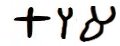
This “sign” of deliverance for the ancient Israelites, spelled “aleph”-“vav”-“tav” in ancient Hebrew letters, explicitly, the sign of blood on doorposts and lintel, also clearly spells out, “leader”, “nail”, and “cross”. Just as blood on the doorposts was the only sign of deliverance for Israel, the cross of the Messiah Yeshua (Jesus, the Christ), is the only sign of deliverance from eternal death for all mankind. [Acts 4:12]
The mystery of salvation was originally revealed in the very letters God used to unfold its story. In the ancient Hebrew He speaks to us from the beginning of time, that the sign of the covenant would be “the leader who was nailed to the cross”. Be in awe of the Father’s love for us!
Copyright 1999-2026 Worthy Devotions. This devotional was originally published on Worthy Devotions and was reproduced with permission.
How to display the above article within the Worthy Suite WordPress Plugin.
[worthy_plugins_devotion_single_body]The high priest of Ancient Israel wore a crown of pure gold on his head called a Nezer, which comes from the word “nazar”. This word "nazar" means to dedicate, consecrate and sacredly separate. The word “nazarite” comes from this root, and describes someone who has taken a vow to be separated from the world.
One of the more beautiful ceremonies of the Jewish faith is called “Tashlich”. Tashlich means to cast away. Every year between Rosh haShana and Yom Kippur, Jewish people around the world journey to a nearby river or stream and cast in bread crumbs as they confess their sins. As the bread crumbs are swept downstream soon to be out of sight, so they believe God will sweep away their sins.
Amazingly another year has passed and tomorrow night begins the feast of Yom Turah -- or Rosh Ha Shannah -- the Feast of Trumpets.
Failure is never a pleasant feeling. It isn’t enjoyable to lose a job, see a relationship falter, or fail a test. But the disappointment we feel when we face defeat can be turned to joy if we look at it the right way!
A "beachhead" is the first objective, the primary location for a military force landing on an enemy shore, which, when secured can be used to gain further advancement.
This is the touching story of how Yeshua (Jesus) was anointed before His crucifixion. But there's one thing about this passaage that stood out to me as I read it again.
As the war continues in Israel, much has been made of the success of the Iron Dome defense system which shoots down incoming rockets from the Gaza Strip. While we are very thankful for the protection this system affords, it does present a certain public relations challenge for Israel. Somehow, regardless of the differences in both size and intention between Israel and the Arab world, the global media frequently emphasizes what they call, “moral equivalency”. The perception of Israel’s military strength and technical superiority somehow makes her the aggressor with an unfair advantage.