Exodus 12:13 Now the blood shall be a sign (Hebrew word – OHT) for you on the houses where you are. And when I see the blood, I will pass over you; and the plague shall not be on you to destroy you when I strike the land of Egypt.
As we discussed, the word for “sign” in ancient Hebrew is “oht”. It was used in Genesis to designate God’s covenant sign with Noah, (the rainbow). And we see now the same word again, in Exodus, identified with the deliverance of the Jewish people from the tenth plague, when the angel of death passed through all Egypt to strike the firstborn. Anyone under the “sign” of the blood was spared.
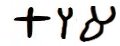
This “sign” of deliverance for the ancient Israelites, spelled “aleph”-“vav”-“tav” in ancient Hebrew letters, explicitly, the sign of blood on doorposts and lintel, also clearly spells out, “leader”, “nail”, and “cross”. Just as blood on the doorposts was the only sign of deliverance for Israel, the cross of the Messiah Yeshua (Jesus, the Christ), is the only sign of deliverance from eternal death for all mankind. [Acts 4:12]
The mystery of salvation was originally revealed in the very letters God used to unfold its story. In the ancient Hebrew He speaks to us from the beginning of time, that the sign of the covenant would be “the leader who was nailed to the cross”. Be in awe of the Father’s love for us!
Copyright 1999-2026 Worthy Devotions. This devotional was originally published on Worthy Devotions and was reproduced with permission.
How to display the above article within the Worthy Suite WordPress Plugin.
[worthy_plugins_devotion_single_body]During his reign, King Frederick William III of Prussia found himself in a bind. Wars had been costly, and in trying to build the nation, he was seriously short of finances. After careful reflection, he decided to ask the women of Prussia if they would bring their jewelry of gold and silver to be melted down for their country. Each piece of jewelry he received, he would exchange for a decoration of bronze or iron as a symbol of his gratitude. These decorations would be inscribed, ‘I gave gold for iron, 18l3’.
In connection with the Hebrew Word “Amen”, meaning “faith”, “truth”, “belief”, and “trust”, consider this revealing passage in Isaiah which further amplifies the dimensions of the word in the most wonderful and comforting promise:
“He who blesses himself in the earth shall bless himself in the God of truth [“Amen” in Hebrew]. …
After spending forty years in the wilderness, the children of Israel crossed into the Promised Land arriving to immediately face what seemed an impregnable fortress and an impossible task. Imagine receiving the instruction to march around the fortified city seven times, then finally be commanded to shout with all your might and sound shofars!
What is it about salt? And how do I season speech with it? Gracious speech is sweet, yet Paul says to season it with salt.
Sometimes, the more significant, powerful, or influential someone is, the less you know about him or her. There are some people of influence whose names most of us have never heard, and about whom we know almost nothing, yet they make decisions which affect millions of lives.
Charles Spurgeon wrote “Prayer pulls the rope below and the great bell rings above in the ears of God. Some scarcely stir the bell, for they pray so languidly. Others give but an occasional pluck at the rope. But he who wins with heaven is the man who grasps the rope boldly and pulls continuously, with all his might.”
Caesarea Phillipi, where Yeshua (Jesus) revealed himself as Messiah to His disciples, was home to the Temple of Pan, a place so demonic that many of the rituals performed there are too horrible to mention in a daily devotion…