Exodus 12:13 Now the blood shall be a sign (Hebrew word – OHT) for you on the houses where you are. And when I see the blood, I will pass over you; and the plague shall not be on you to destroy you when I strike the land of Egypt.
As we discussed, the word for “sign” in ancient Hebrew is “oht”. It was used in Genesis to designate God’s covenant sign with Noah, (the rainbow). And we see now the same word again, in Exodus, identified with the deliverance of the Jewish people from the tenth plague, when the angel of death passed through all Egypt to strike the firstborn. Anyone under the “sign” of the blood was spared.
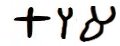
This “sign” of deliverance for the ancient Israelites, spelled “aleph”-“vav”-“tav” in ancient Hebrew letters, explicitly, the sign of blood on doorposts and lintel, also clearly spells out, “leader”, “nail”, and “cross”. Just as blood on the doorposts was the only sign of deliverance for Israel, the cross of the Messiah Yeshua (Jesus, the Christ), is the only sign of deliverance from eternal death for all mankind. [Acts 4:12]
The mystery of salvation was originally revealed in the very letters God used to unfold its story. In the ancient Hebrew He speaks to us from the beginning of time, that the sign of the covenant would be “the leader who was nailed to the cross”. Be in awe of the Father’s love for us!
Copyright 1999-2026 Worthy Devotions. This devotional was originally published on Worthy Devotions and was reproduced with permission.
How to display the above article within the Worthy Suite WordPress Plugin.
[worthy_plugins_devotion_single_body]This groundbreaking conversation took place at Caesarea Phillipi, which lies today in the modern day reserve of the Banias in the Golan Heights region of Israel. The city was established by Ptolemaic Greeks, a Hellenistic community where the worship of the god Pan was centered. Reviled by the Jews of Yeshua’s time and considered by them the most idolatrous place in the entire Galilee, to this day it remains a place of nature worship and deep paganism…
David’s faith and courage in volunteering to fight Goliath was an embarrassment to his big brother Eliab, an officer in King Saul’s army. I imagine his thinking went something like this; “If my little brother wins everybody will ask, ‘How come you didn’t go out and fight him?’” The Bible records that Eliab “burned with anger at David and asked, ‘Why have you come down here? And with whom did you leave those few sheep in the desert? I know how conceited you are and how wicked your heart is…’” These are devastating words from an older brother. Before David could defeat Goliath he first had to overcome the attitudes, accusations and words, of those close around him.
The noted English architect Sir Christopher Wren was supervising the construction of a magnificent cathedral in London. A journalist thought it would be interesting to interview some of the workers, so he chose three and asked them this question, “What are you doing?” The first replied, “I’m cutting stone for a shabby 10 shillings a day.” The next answered, “I’m putting in 13 hard hours a day on this job.” But the last said, “I’m helping Sir Christopher Wren construct one of London’s greatest cathedrals.”
It is among popular “Christian” belief that an abundance of material and other blessings follow those whose hearts are truly after God and that those who seem to consistently struggle to that end, cannot possibly be in God’s perfect will. I want to submit to you a realization I had about this very thing. I think we might have it all backwards.
A National Geographic article published a few years describing a real celestial event which took place at the time of the birth of Jesus reminded me of Risto Santala’s explanation in his book, “The Messiah in the New Testament in the Light of Rabbinical Writings”. He wrote about a conjunction of major planets that took place which could have led the wise men from the east, to Israel.
The Shema is recited every Shabbat in Israel and throughout the world: “Hear, O Israel, the Lord is our God, the Lord is One.” The emphasis is on hearing—not just with our ears but our hearts. That same emphasis runs through the Gospels, where Yeshua (Jesus) repeatedly says, “He who has ears to hear, let him hear.” This isn’t just a phrase; it’s a life-changing command.
Many families across the U.S. are gathering today to celebrate “Thanksgiving.” But let’s take a moment to turn our hearts to the ultimate source of thanksgiving: God Himself. Psalm 100 is often called the “Psalm of Thanksgiving,” and it’s a perfect guide for how we should approach God—not just during Thanksgiving but every day.