Php 1:21 For to me to live is Christ, and to die is gain.
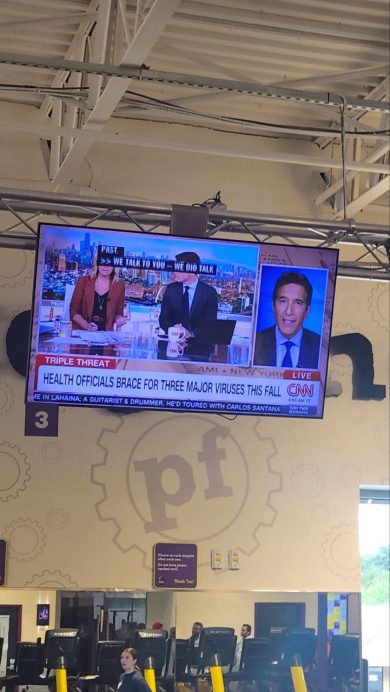
I happened (on rare occasion) the other day to see a CNN headline, “Health Officials Brace for Three Major Viruses this Fall”. Immediately, I thought, “Not again!” Yet, scouring the headlines, it now appears that several colleges are instituting mask mandates even though there isn’t a case of illness yet. While the world is being prepared for an “outbreak” of disease, I’m hoping we may learn a lesson from history so that, perhaps, we’ll see an “outbreak” of revival!
 Church history reveals that God used pandemics to test the saints, demonstrate their faith, courage, and love, and dramatically advance the gospel. The Antonine Plague in the 2nd century lasted over 10 years, resulting in at least 5 million deaths. The Plague of Cyprian in the 3rd century devastated the population of Alexandria, dropping it from 500,000 to 190,000.
While pagan priests were fleeing the plague and leaving the sick to die, it was the steadfast faith of the saints that cared for the sick in the face of death. This rarely acknowledged Christian heroism radically transformed the Roman Empire, leading to the eradication of the pagan gods and eventually to a massive social transformation.
Cyprian, the bishop of Carthage, witnessed and described the atmosphere of the time:
“There is nothing remarkable in cherishing merely our own people with the due attentions of love, but that one might become perfect, he who should do something more than heathen men or publicans; overcoming evil with good, and practicing a merciful kindness like that of God, he should love his enemies as well…Thus the good was done to all men, not merely to the household of faith.”
“By the terrors of mortality and of the times, lukewarm men are heartened, the listless nerved, the sluggish awakened; deserters are compelled to return; heathens brought to believe; the congregation of established believers is called to rest; fresh and numerous champions are banded in heartier strength for the conflict, and having come into warfare in the season of death, will fight without fear of death, when the battle comes.”
Historians noted that the Christians’ compassion and devotion to tending the sick during the pandemics caused the pagan world to collapse and saw an explosive growth of Christianity with many coming to faith.
Our brother Paul wrote, “For me to live is Christ, and to die is gain.” [Philippians 1:21] Death threats, which came to him in many forms, did not deter him at all from his divine purpose in the Gospel; they simply became part of his amazing testimony, bringing innumerable souls to the revelation of the Messiah. Cyprian’s marvelous account of fearless and faith-filled saints exemplifies the power and love of Christ. If the above headline is true, let’s seize the opportunity.
Copyright 1999-2026 Worthy Devotions. This devotional was originally published on Worthy Devotions and was reproduced with permission.
How to display the above article within the Worthy Suite WordPress Plugin.
[worthy_plugins_devotion_single_body]A woman once asked John Wesley what he would do if he knew that he would die at midnight the next day. "Why, Madam," he replied, "just as I intend to spend it now. I would preach this evening at Gloucester, and again at five tomorrow morning, after that I would ride to Tewkesbury, preach in the afternoon, and meet the societies in the evening. I would then go to Martin's house...talk and pray with the family as usual, retire myself to my room at 10 o'clock, commend myself to my Heavenly Father, lie down to rest, and wake up in glory."
Some time ago, two university students in Moorhead, Minnesota painted a mural on the wall outside their dorm room. It was of a school of fish all swimming in the same direction except for a single fish heading the opposite way. That one fish going the other direction was meant to be Jesus. Included in the mural were the words, "Go against the flow." Sadly, university officials argued that the mural might offend non-Christians, and told the students to paint over it.
It was a bright Sunday morning in 18th century London, but Robert Robinson’s mood was anything but sunny. All along the street there were people hurrying to church, but in the midst of the crowd Robinson was a lonely man. The sound of church bells reminded him of years past when his faith in God was strong and the church was an integral part of his life...
As Scotland was declaring its independence from England in the 1300's, the English were hunting for Robert Bruce of Scotland in an attempt to prevent his accession to the Scottish throne. In the search, the English put Bruce's own bloodhounds on his trail. As they grew closer to apprehending him, Robert the Bruce found a small river, and he said to his foster-brother who was with him, "Let us wade down this stream for a great way, instead of going straight across, and so these unhappy hounds will lose the scent; for if we were once clear of them, I should not be afraid of getting away from the pursuers."
In one sermon, D.L. Moody held up a glass and asked, "How can I get the air out of this glass?" One man shouted, "Suck it out with a pump!" Moody replied, "That would create a vacuum and shatter the glass." After numerous other suggestions Moody smiled, took out a pitcher of water, and filled the glass. "There," he said, "all the air is now removed."
In the Tenach (Old Testament), the Lord commanded Israel to count the Omer (the Barley Harvest) beginning the day after the sabbath during Passover, 50 days to the Biblical Festival of Shavuot (Pentecost). Today is the 4th day of the Omer and Shavuot is just a few weeks away...
I recently read a story about a rather pompous-looking deacon who was endeavoring to impress upon a class of boys the importance of living the Christian life. 'Why do you think people call me a Christian?' the man asked. After a moment's pause, one youngster said, 'Maybe it's because they don't know you.'