Exodus 12:13 Now the blood shall be a sign (Hebrew word – OHT) for you on the houses where you are. And when I see the blood, I will pass over you; and the plague shall not be on you to destroy you when I strike the land of Egypt.
As we discussed, the word for “sign” in ancient Hebrew is “oht”. It was used in Genesis to designate God’s covenant sign with Noah, (the rainbow). And we see now the same word again, in Exodus, identified with the deliverance of the Jewish people from the tenth plague, when the angel of death passed through all Egypt to strike the firstborn. Anyone under the “sign” of the blood was spared.
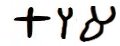
This “sign” of deliverance for the ancient Israelites, spelled “aleph”-“vav”-“tav” in ancient Hebrew letters, explicitly, the sign of blood on doorposts and lintel, also clearly spells out, “leader”, “nail”, and “cross”. Just as blood on the doorposts was the only sign of deliverance for Israel, the cross of the Messiah Yeshua (Jesus, the Christ), is the only sign of deliverance from eternal death for all mankind. [Acts 4:12]
The mystery of salvation was originally revealed in the very letters God used to unfold its story. In the ancient Hebrew He speaks to us from the beginning of time, that the sign of the covenant would be “the leader who was nailed to the cross”. Be in awe of the Father’s love for us!
Copyright 1999-2026 Worthy Devotions. This devotional was originally published on Worthy Devotions and was reproduced with permission.
How to display the above article within the Worthy Suite WordPress Plugin.
[worthy_plugins_devotion_single_body]Writing daily devotions throughout the years I’ve often been asked the question, “How do I find the will of God?” There are probably many good scriptural approaches to answering this question; but I want to offer something very basic as you think about understanding the will of God. That is, simply, that you’ll know His will when you come to know the heart of God.
These past few days, writing about the will of God, has reminded me of the prophet Jeremiah, and how the Lord knew him – even before he was in his mother’s womb, and he was sanctified by God as a prophet to the nations. A similar foreknowledge and ordination of God belongs to us who are under the New Covenant. God’s foreknowledge of His people is clearly stated in scripture. We were chosen in Him before the foundation of the world to be holy and blameless, and created in Messiah Yeshua (Christ Jesus) unto good works which He foreordained that we walk in them.
For the past few days we’ve been delving into the multiple meanings of “Amen”. While “Amen” is most commonly found at the end of prayers, the Lord Yeshua (Jesus) often used it at the beginning of a statement: “Truly, truly, I say unto you …” more accurately translated, “Amen, Amen, I say unto you…”
Murmuring or complaining is one of those sins that are overlooked. Sometimes we get so focused on the “big sins” such as murder and adultery that we overlook this sin — but the Lord doesn’t give this sin a free pass — quite the opposite. It’s a hidden killer! This sin unleashed a plague that killed thousands of Israelites! [Numbers 16]
For years, when I visited my father-in-law’s home in Jerusalem on the Sabbath, we would break bread and bless the bread with the traditional blessing – “Baruch Ata Adonai Eleheynu Melech HaOlam Ha-Motzi Lechem Min Ha’aretz” – which translated means,”Blessed are You Lord our God, King of the Universe, Who has given us bread from the earth”. After the blessing, my father-in-law would take salt and sprinkle the challah bread as he broke and passed it to everyone at the table.
Yeshua (Jesus) said He is the “bread of life”. It was His body that was broken on our behalf as the substitutionary sacrifice for our sins. Notice that He never once called us to be the “bread of life”! He is the ONLY “Bread of Life” – the true bread who came down from Heaven which anyone may eat and not die. Whoever eats this bread will live forever. This bread is His flesh, given for the life of the world.
As we continue to probe the lessons from the salt covenant, we now inquire into our part in the covenant.