by Emmitt Barry, Worthy News Washington D.C. Bureau Chief
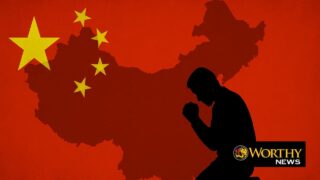
WENZHOU, CHINA (Worthy News) – A prominent house church pastor and six other Christians have disappeared after being detained by police in Wenzhou, a major Christian center in eastern China often called the “Jerusalem of China.”
Pastor David Tang, founder and senior pastor of Purpose Driven Church, also known as Biaogan Church, was taken into custody along with a church financial administrator and five ministry workers on August 5, according to Christian Solidarity Worldwide and ChinaAid. Their whereabouts remain unknown, and authorities have not publicly disclosed the reason for their detention.
Purpose Driven Church is an unregistered congregation known for attracting young professionals and intellectuals. The church has refused to join China’s government-controlled Three-Self Patriotic Movement or register with state authorities and has continued operating despite previously being forced to close.
The detentions come amid a widening crackdown on independent Christian churches in Wenzhou and throughout Zhejiang Province. Authorities have increasingly imposed surveillance, restricted religious education, removed crosses, and detained pastors and church members who refuse government oversight.
ChinaAid President Bob Fu said Chinese authorities are increasingly using economic or criminal accusations rather than openly religious charges against church leaders, calling the strategy an effort to conceal systematic religious persecution.
Christian Solidarity Worldwide called on Chinese authorities to immediately reveal the detainees’ whereabouts, provide access to their families and legal counsel, and release them unless legitimate criminal evidence is produced.
China’s Underground Church: Decades of Persecution, Remarkable Gospel Growth
When Mao Zedong’s Communist forces took control of China in 1949, the future of Christianity appeared bleak. Foreign missionaries were expelled, churches were placed under Communist Party control, and pastors and believers who refused to submit faced imprisonment, labor camps, and sometimes death. During Mao’s Cultural Revolution, beginning in 1966, organized religious life was driven almost completely underground.
Yet instead of extinguishing Christianity, persecution helped scatter the Gospel through an extraordinary network of homes, villages, factories, universities, and underground fellowships.
When the Communists came to power, China had only several million Christians. In the decades that followed, however, Christianity expanded dramatically. Precise numbers remain difficult to establish because millions worship outside government-approved churches, but Pew Research has documented the enormous expansion of Christianity that occurred particularly during the 1980s and 1990s.
At the heart of that growth has been China’s house church movement — congregations that refuse to place their doctrine, leadership, and worship under the authority of the Communist Party-controlled religious system.
For generations, believers have met quietly in homes, apartments, fields, factories and other locations, often changing meeting places to avoid detection. Entire networks of churches developed with little property, few formal institutions and, in many cases, no foreign missionaries.
The persecution never disappeared. Chinese authorities have repeatedly raided unregistered churches, detained pastors, confiscated Bibles and church property, placed Christians under surveillance, and charged believers with conducting “illegal religious activities.”
Under President Xi Jinping, pressure has intensified as Beijing has sought to bring religious expression under tighter Communist Party control. Recent cases have included the detention of pastors and leaders of major house-church networks that refuse state oversight.
The remarkable story of Christianity in modern China therefore carries an extraordinary paradox: one of the most sustained campaigns to suppress the Church has coincided with one of the most dramatic expansions of the Gospel in modern history.
For more than seven decades, governments have attempted to control, intimidate and sometimes crush China’s underground believers. Yet the house church survived — and multiplied.
As the ancient Church discovered under persecution, buildings can be closed, pastors can be imprisoned, and believers can be scattered, but the Gospel itself is far harder to contain.
Copyright 1999-2026 Worthy News. This article was originally published on Worthy News and was reproduced with permission.
The following code is how the above article is generated with the Worthy Suite WordPress Plugin.
[worthy_plugins_news_story_body]This is how you display a story with an image.
Pastor, Six Christians Disappear After Police Raid in China’s “Jerusalem”
by Emmitt Barry, Worthy News Washington D.C. Bureau Chief
WENZHOU, CHINA (Worthy News) – A prominent house church pastor and six other Christians have disappeared after being detained by police in Wenzhou, a major Christian center in eastern China often called the “Jerusalem of China.”
Pastor David Tang, founder and senior pastor of Purpose Driven Church, also known as Biaogan Church, was taken into custody along with a church financial administrator and five ministry workers on August 5, according to Christian Solidarity Worldwide and ChinaAid. Their whereabouts remain unknown, and authorities have not publicly disclosed the reason for their detention.
Purpose Driven Church is an unregistered congregation known for attracting young professionals and intellectuals. The church has refused to join China’s government-controlled Three-Self Patriotic Movement or register with state authorities and has continued operating despite previously being forced to close.
The detentions come amid a widening crackdown on independent Christian churches in Wenzhou and throughout Zhejiang Province. Authorities have increasingly imposed surveillance, restricted religious education, removed crosses, and detained pastors and church members who refuse government oversight.
ChinaAid President Bob Fu said Chinese authorities are increasingly using economic or criminal accusations rather than openly religious charges against church leaders, calling the strategy an effort to conceal systematic religious persecution.
Christian Solidarity Worldwide called on Chinese authorities to immediately reveal the detainees’ whereabouts, provide access to their families and legal counsel, and release them unless legitimate criminal evidence is produced.
China’s Underground Church: Decades of Persecution, Remarkable Gospel Growth
When Mao Zedong’s Communist forces took control of China in 1949, the future of Christianity appeared bleak. Foreign missionaries were expelled, churches were placed under Communist Party control, and pastors and believers who refused to submit faced imprisonment, labor camps, and sometimes death. During Mao’s Cultural Revolution, beginning in 1966, organized religious life was driven almost completely underground.
Yet instead of extinguishing Christianity, persecution helped scatter the Gospel through an extraordinary network of homes, villages, factories, universities, and underground fellowships.
When the Communists came to power, China had only several million Christians. In the decades that followed, however, Christianity expanded dramatically. Precise numbers remain difficult to establish because millions worship outside government-approved churches, but Pew Research has documented the enormous expansion of Christianity that occurred particularly during the 1980s and 1990s.
At the heart of that growth has been China’s house church movement — congregations that refuse to place their doctrine, leadership, and worship under the authority of the Communist Party-controlled religious system.
For generations, believers have met quietly in homes, apartments, fields, factories and other locations, often changing meeting places to avoid detection. Entire networks of churches developed with little property, few formal institutions and, in many cases, no foreign missionaries.
The persecution never disappeared. Chinese authorities have repeatedly raided unregistered churches, detained pastors, confiscated Bibles and church property, placed Christians under surveillance, and charged believers with conducting “illegal religious activities.”
Under President Xi Jinping, pressure has intensified as Beijing has sought to bring religious expression under tighter Communist Party control. Recent cases have included the detention of pastors and leaders of major house-church networks that refuse state oversight.
The remarkable story of Christianity in modern China therefore carries an extraordinary paradox: one of the most sustained campaigns to suppress the Church has coincided with one of the most dramatic expansions of the Gospel in modern history.
For more than seven decades, governments have attempted to control, intimidate and sometimes crush China’s underground believers. Yet the house church survived — and multiplied.
As the ancient Church discovered under persecution, buildings can be closed, pastors can be imprisoned, and believers can be scattered, but the Gospel itself is far harder to contain.
Copyright 1999-2026 Worthy News. This article was originally published on Worthy News and was reproduced with permission.
[worthy_plugins_news_story_title]
<div style="text-align:right; padding:0px 0px 10px 15px; float:right; width:300px;"><img src="[worthy_plugins_news_story_image name=sm_medium]" alt="" /></div>[worthy_plugins_news_story_body]