by Emmitt Barry, Worthy News Washington D.C. Bureau Chief
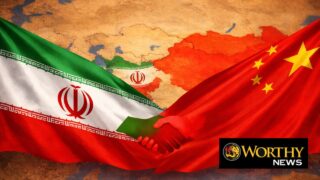
(Worthy News) – China pushed back Tuesday against the Trump administration’s expanding sanctions campaign on Iran, signaling that Beijing will not submit to Washington’s effort to isolate Tehran through what U.S. officials have described as a sweeping economic offensive.
The response came after the U.S. Treasury Department launched Operation Economic Outcast, a new whole-of-government sanctions campaign aimed at severing Iran from international financial networks and cutting off revenue streams used by the regime, the Islamic Revolutionary Guard Corps, and affiliated terror networks. The White House said the campaign targets Iran’s access to digital assets, technology, gold, aviation, and shipping.
Chinese officials denounced the threat of secondary sanctions, arguing that Beijing opposes unilateral economic penalties not authorized by the U.N. Security Council. China has long been one of Iran’s most important economic lifelines, particularly through energy trade, and has resisted U.S. efforts to force countries to cut commercial ties with Tehran.
Treasury Secretary Scott Bessent said the United States is moving to choke off Iran’s financial channels worldwide, warning nations and entities that continue helping Tehran evade sanctions that they could face consequences. The initial U.S. action targeted dozens of individuals, companies, and vessels tied to Iranian oil movements and procurement networks, including activity routed through China, Hong Kong, Singapore, the UAE, and Europe.
Iran also vowed to resist the pressure campaign, saying it believes major trading partners will not fully comply with Washington’s demands. Reuters reported that Tehran sees the sanctions drive as an attempt to revive stalled political talks while increasing economic leverage over the regime.
The confrontation now places U.S.-China relations at the center of the Iran sanctions battle. Analysts noted that while Washington has threatened tough secondary sanctions, the administration has so far avoided directly targeting major Chinese financial institutions, raising questions about how far the White House is prepared to go if Beijing continues buying Iranian oil.
The Trump administration has framed the new sanctions push as an alternative to renewed military escalation, seeking to force Tehran into isolation while squeezing the regime’s ability to fund its military and proxy networks across the Middle East.
Copyright 1999-2026 Worthy News. This article was originally published on Worthy News and was reproduced with permission.
The following code is how the above article is generated with the Worthy Suite WordPress Plugin.
[worthy_plugins_news_story_body]This is how you display a story with an image.
China Rejects U.S. Pressure Over Iran Sanctions, Vows It Will Not Bow to ‘Economic Warfare’
by Emmitt Barry, Worthy News Washington D.C. Bureau Chief
(Worthy News) – China pushed back Tuesday against the Trump administration’s expanding sanctions campaign on Iran, signaling that Beijing will not submit to Washington’s effort to isolate Tehran through what U.S. officials have described as a sweeping economic offensive.
The response came after the U.S. Treasury Department launched Operation Economic Outcast, a new whole-of-government sanctions campaign aimed at severing Iran from international financial networks and cutting off revenue streams used by the regime, the Islamic Revolutionary Guard Corps, and affiliated terror networks. The White House said the campaign targets Iran’s access to digital assets, technology, gold, aviation, and shipping.
Chinese officials denounced the threat of secondary sanctions, arguing that Beijing opposes unilateral economic penalties not authorized by the U.N. Security Council. China has long been one of Iran’s most important economic lifelines, particularly through energy trade, and has resisted U.S. efforts to force countries to cut commercial ties with Tehran.
Treasury Secretary Scott Bessent said the United States is moving to choke off Iran’s financial channels worldwide, warning nations and entities that continue helping Tehran evade sanctions that they could face consequences. The initial U.S. action targeted dozens of individuals, companies, and vessels tied to Iranian oil movements and procurement networks, including activity routed through China, Hong Kong, Singapore, the UAE, and Europe.
Iran also vowed to resist the pressure campaign, saying it believes major trading partners will not fully comply with Washington’s demands. Reuters reported that Tehran sees the sanctions drive as an attempt to revive stalled political talks while increasing economic leverage over the regime.
The confrontation now places U.S.-China relations at the center of the Iran sanctions battle. Analysts noted that while Washington has threatened tough secondary sanctions, the administration has so far avoided directly targeting major Chinese financial institutions, raising questions about how far the White House is prepared to go if Beijing continues buying Iranian oil.
The Trump administration has framed the new sanctions push as an alternative to renewed military escalation, seeking to force Tehran into isolation while squeezing the regime’s ability to fund its military and proxy networks across the Middle East.
Copyright 1999-2026 Worthy News. This article was originally published on Worthy News and was reproduced with permission.
[worthy_plugins_news_story_title]
<div style="text-align:right; padding:0px 0px 10px 15px; float:right; width:300px;"><img src="[worthy_plugins_news_story_image name=sm_medium]" alt="" /></div>[worthy_plugins_news_story_body]