by Emmitt Barry, Worthy News Washington D.C. Bureau Chief
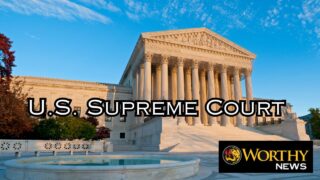
(Worthy News) – The U.S. Supreme Court is again being asked to step into the national fight over whether states may require the Ten Commandments to be posted in public school classrooms, as new challenges from Louisiana and Texas push the issue toward a potentially major First Amendment showdown.
SCOTUSblog reported that the latest request comes as the justices are already facing pressure to revisit the issue after the 5th U.S. Circuit Court of Appeals allowed Ten Commandments display laws in Texas and Louisiana to move forward. The high court last squarely addressed the matter in 1980, when it struck down a Kentucky classroom-display law in Stone v. Graham.
In Louisiana, teacher Chris Dier has asked the Supreme Court to hear his challenge to the state’s law requiring Ten Commandments displays in public K-12 and college classrooms. Dier, a history teacher in New Orleans and former Louisiana Teacher of the Year, argues that the law forces teachers and students to operate under a state-selected religious text.
Texas families have also petitioned the Supreme Court after the 5th Circuit upheld a similar Texas law in a narrow 9-8 ruling. The Texas law requires public school classrooms to display a state-selected version of the Ten Commandments if donated posters are provided.
Supporters of the laws argue the Ten Commandments are part of America’s moral and legal heritage, not merely a sectarian statement. In a 5th Circuit concurrence, Judge James Ho wrote that the Founders “didn’t just permit religion in education—they presumed that there would be religion in education.”
Opponents counter that mandatory classroom displays cross the line from teaching history into government-endorsed religion. Dissenting judges in the Louisiana case argued that posting the Ten Commandments in every classroom without tying them to curriculum remains materially similar to the kind of display the Supreme Court struck down more than four decades ago.
The cases now give the Supreme Court a chance to clarify how far states may go in recognizing the Bible’s influence on American civic life while still respecting the First Amendment’s limits on government establishment of religion.
Copyright 1999-2026 Worthy News. This article was originally published on Worthy News and was reproduced with permission.
The following code is how the above article is generated with the Worthy Suite WordPress Plugin.
[worthy_plugins_news_story_body]This is how you display a story with an image.
Supreme Court Asked Again to Take Up Ten Commandments in Public Schools
by Emmitt Barry, Worthy News Washington D.C. Bureau Chief
(Worthy News) – The U.S. Supreme Court is again being asked to step into the national fight over whether states may require the Ten Commandments to be posted in public school classrooms, as new challenges from Louisiana and Texas push the issue toward a potentially major First Amendment showdown.
SCOTUSblog reported that the latest request comes as the justices are already facing pressure to revisit the issue after the 5th U.S. Circuit Court of Appeals allowed Ten Commandments display laws in Texas and Louisiana to move forward. The high court last squarely addressed the matter in 1980, when it struck down a Kentucky classroom-display law in Stone v. Graham.
In Louisiana, teacher Chris Dier has asked the Supreme Court to hear his challenge to the state’s law requiring Ten Commandments displays in public K-12 and college classrooms. Dier, a history teacher in New Orleans and former Louisiana Teacher of the Year, argues that the law forces teachers and students to operate under a state-selected religious text.
Texas families have also petitioned the Supreme Court after the 5th Circuit upheld a similar Texas law in a narrow 9-8 ruling. The Texas law requires public school classrooms to display a state-selected version of the Ten Commandments if donated posters are provided.
Supporters of the laws argue the Ten Commandments are part of America’s moral and legal heritage, not merely a sectarian statement. In a 5th Circuit concurrence, Judge James Ho wrote that the Founders “didn’t just permit religion in education—they presumed that there would be religion in education.”
Opponents counter that mandatory classroom displays cross the line from teaching history into government-endorsed religion. Dissenting judges in the Louisiana case argued that posting the Ten Commandments in every classroom without tying them to curriculum remains materially similar to the kind of display the Supreme Court struck down more than four decades ago.
The cases now give the Supreme Court a chance to clarify how far states may go in recognizing the Bible’s influence on American civic life while still respecting the First Amendment’s limits on government establishment of religion.
Copyright 1999-2026 Worthy News. This article was originally published on Worthy News and was reproduced with permission.
[worthy_plugins_news_story_title]
<div style="text-align:right; padding:0px 0px 10px 15px; float:right; width:300px;"><img src="[worthy_plugins_news_story_image name=sm_medium]" alt="" /></div>[worthy_plugins_news_story_body]