Covert missile program points to deepening Moscow-Tehran military cooperation as tensions rise across the Middle East
by Emmitt Barry, Worthy News Washington D.C. Bureau Chief
JERUSALEM/WASHINGTON (Worthy News) – Russia secretly assisted Iran in developing advanced supersonic cruise missile technology that could threaten U.S. Navy aircraft carriers and other American military assets in the Middle East, according to a new Financial Times investigation.
The report said the covert program, reportedly codenamed C430L, began in 2023 and involved Russian missile specialists helping Iran develop ramjet propulsion systems — technology that can allow cruise missiles to travel several times the speed of sound and make interception more difficult.
According to the Financial Times, leaked documents reviewed by the newspaper showed that cooperation continued into 2026 and included technical exchanges involving Russian defense entities, including Rosoboronexport and NPO Mashinostroyenia.
The development is significant because Iran has long sought more advanced anti-ship missile capabilities that could threaten U.S. naval power in the Persian Gulf and surrounding waters. Aircraft carriers remain central to America’s ability to project force in the region, and any credible Iranian capability to target them would sharply raise the stakes in a future confrontation.
The report comes amid a growing military relationship between Moscow and Tehran. Iran has supplied Russia with drones used in the war in Ukraine, while Russia has reportedly provided Iran with military intelligence and technical assistance useful for targeting U.S. and allied assets in the Middle East.
Public evidence that Iran has deployed an operational version of the missile system described in the report is still lacking. However, the reported assistance suggests that Russia is no longer merely buying Iranian weapons but helping Tehran close critical gaps in its own missile program.
For Washington and Jerusalem, the revelation underscores a broader strategic reality: Russia, Iran, and other anti-Western powers are increasingly sharing technology, intelligence, and battlefield lessons across separate conflicts that are becoming more connected by the month.
Copyright 1999-2026 Worthy News. This article was originally published on Worthy News and was reproduced with permission.
The following code is how the above article is generated with the Worthy Suite WordPress Plugin.
[worthy_plugins_news_story_body]This is how you display a story with an image.
Russia Secretly Helped Iran Develop Missiles Designed to Target U.S. Carriers
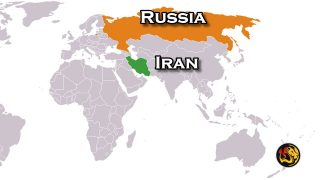
Covert missile program points to deepening Moscow-Tehran military cooperation as tensions rise across the Middle East
by Emmitt Barry, Worthy News Washington D.C. Bureau Chief
JERUSALEM/WASHINGTON (Worthy News) – Russia secretly assisted Iran in developing advanced supersonic cruise missile technology that could threaten U.S. Navy aircraft carriers and other American military assets in the Middle East, according to a new Financial Times investigation.
The report said the covert program, reportedly codenamed C430L, began in 2023 and involved Russian missile specialists helping Iran develop ramjet propulsion systems — technology that can allow cruise missiles to travel several times the speed of sound and make interception more difficult.
According to the Financial Times, leaked documents reviewed by the newspaper showed that cooperation continued into 2026 and included technical exchanges involving Russian defense entities, including Rosoboronexport and NPO Mashinostroyenia.
The development is significant because Iran has long sought more advanced anti-ship missile capabilities that could threaten U.S. naval power in the Persian Gulf and surrounding waters. Aircraft carriers remain central to America’s ability to project force in the region, and any credible Iranian capability to target them would sharply raise the stakes in a future confrontation.
The report comes amid a growing military relationship between Moscow and Tehran. Iran has supplied Russia with drones used in the war in Ukraine, while Russia has reportedly provided Iran with military intelligence and technical assistance useful for targeting U.S. and allied assets in the Middle East.
Public evidence that Iran has deployed an operational version of the missile system described in the report is still lacking. However, the reported assistance suggests that Russia is no longer merely buying Iranian weapons but helping Tehran close critical gaps in its own missile program.
For Washington and Jerusalem, the revelation underscores a broader strategic reality: Russia, Iran, and other anti-Western powers are increasingly sharing technology, intelligence, and battlefield lessons across separate conflicts that are becoming more connected by the month.
Copyright 1999-2026 Worthy News. This article was originally published on Worthy News and was reproduced with permission.
[worthy_plugins_news_story_title]
<div style="text-align:right; padding:0px 0px 10px 15px; float:right; width:300px;"><img src="[worthy_plugins_news_story_image name=sm_medium]" alt="" /></div>[worthy_plugins_news_story_body]