by Emmitt Barry, Worthy News Washington D.C. Bureau Chief
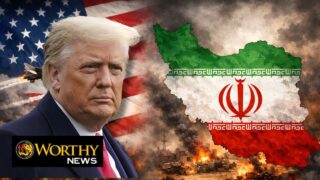
(Worthy News) – President Donald Trump announced what he called an “Economic D-Day” against Iran on Wednesday, warning that countries, banks, businesses and governments that continue providing Tehran with economic lifelines could themselves face severe U.S. consequences.
“Today, I am announcing the MOST CRUSHING ECONOMIC OPERATION EVER TAKEN AGAINST ANY COUNTRY!” Trump wrote on Truth Social, declaring that Washington would pursue “Economic Warfare and Isolation on an unprecedented scale.”
Trump said the campaign would extend well beyond Iran itself.
“ANY country that allows its financial institutions, businesses, airports, or government entities to provide any type of lifeline to Iran will itself face TREMENDOUS Economic Consequences,” Trump warned.
He specifically targeted channels Tehran has historically used to evade international sanctions, including oil smuggling, cash transfers, exchange houses, ship registries and front companies.
“This will be an ECONOMIC D-DAY, and we need all of our Allies to stand with the United States of America to isolate, and defeat, the Iran threat,” Trump said.
UAE Cuts Major Iranian Economic Lifeline
Trump’s announcement came less than a day after the United Arab Emirates suspended financial and economic transactions with Iran, severing one of Tehran’s most important commercial and financial gateways.
The Wall Street Journal reported that Washington had been pressing the UAE to crack down on Iranian financial networks operating through Dubai, where front companies and other entities have helped Tehran gain access to foreign currency and international commerce despite U.S. sanctions.
The UAE’s action could therefore become a major component of Trump’s broader strategy. Fox News reported that Iran imports roughly $21 billion worth of goods through the UAE, making the Emirates one of Tehran’s most significant remaining economic links.
Washington Shifts Toward Economic Warfare
The new campaign follows weeks in which the Trump administration has increasingly emphasized economic pressure rather than immediately returning to full-scale military operations.
The Wall Street Journal previously reported that Trump had settled on a strategy of allowing financial sanctions and the U.S. naval blockade to place greater strain on Iran’s economy.
Treasury Secretary Scott Bessent also foreshadowed the move last week, saying the administration was preparing measures unlike anything previously used to isolate another country economically.
Iranian officials themselves have acknowledged the growing impact. According to the Wall Street Journal, Iran’s blockade-driven shipping costs have risen sharply as imports are forced onto expensive overland routes, placing additional pressure on an already battered economy.
Diplomacy Appears to Be Fading
Trump’s announcement comes as prospects for renewed negotiations have sharply diminished.
On Tuesday, Trump said there were “no talks or conversations” taking place or scheduled with Tehran. Iran, meanwhile, continued to insist that the Strait of Hormuz remained restricted despite Trump’s assertion that the strategic waterway was open.
The nearly six-month conflict has increasingly become a battle of economic endurance, with Washington attempting to squeeze Iran financially while Tehran uses disruption in the Strait of Hormuz to place pressure on global energy markets.
Oil prices reflected the growing uncertainty Wednesday, with Brent crude settling at $91.62 per barrel, its highest closing level in nearly four weeks.
Trump argued that Iran is already approaching a breaking point, declaring that its military infrastructure has been devastated, its currency severely weakened and its economy increasingly isolated.
“These maniacs are on the ropes,” Trump said.
The next stage of Trump’s Iran strategy may therefore depend less on another massive wave of airstrikes than on whether Washington can convince—or compel—the rest of the world to close the remaining financial escape routes keeping Tehran’s economy functioning.
Copyright 1999-2026 Worthy News. This article was originally published on Worthy News and was reproduced with permission.
The following code is how the above article is generated with the Worthy Suite WordPress Plugin.
[worthy_plugins_news_story_body]This is how you display a story with an image.
Trump Declares ‘Economic D-Day’ Against Iran, Threatens Nations Keeping Tehran Afloat
by Emmitt Barry, Worthy News Washington D.C. Bureau Chief
(Worthy News) – President Donald Trump announced what he called an “Economic D-Day” against Iran on Wednesday, warning that countries, banks, businesses and governments that continue providing Tehran with economic lifelines could themselves face severe U.S. consequences.
“Today, I am announcing the MOST CRUSHING ECONOMIC OPERATION EVER TAKEN AGAINST ANY COUNTRY!” Trump wrote on Truth Social, declaring that Washington would pursue “Economic Warfare and Isolation on an unprecedented scale.”
Trump said the campaign would extend well beyond Iran itself.
“ANY country that allows its financial institutions, businesses, airports, or government entities to provide any type of lifeline to Iran will itself face TREMENDOUS Economic Consequences,” Trump warned.
He specifically targeted channels Tehran has historically used to evade international sanctions, including oil smuggling, cash transfers, exchange houses, ship registries and front companies.
“This will be an ECONOMIC D-DAY, and we need all of our Allies to stand with the United States of America to isolate, and defeat, the Iran threat,” Trump said.
UAE Cuts Major Iranian Economic Lifeline
Trump’s announcement came less than a day after the United Arab Emirates suspended financial and economic transactions with Iran, severing one of Tehran’s most important commercial and financial gateways.
The Wall Street Journal reported that Washington had been pressing the UAE to crack down on Iranian financial networks operating through Dubai, where front companies and other entities have helped Tehran gain access to foreign currency and international commerce despite U.S. sanctions.
The UAE’s action could therefore become a major component of Trump’s broader strategy. Fox News reported that Iran imports roughly $21 billion worth of goods through the UAE, making the Emirates one of Tehran’s most significant remaining economic links.
Washington Shifts Toward Economic Warfare
The new campaign follows weeks in which the Trump administration has increasingly emphasized economic pressure rather than immediately returning to full-scale military operations.
The Wall Street Journal previously reported that Trump had settled on a strategy of allowing financial sanctions and the U.S. naval blockade to place greater strain on Iran’s economy.
Treasury Secretary Scott Bessent also foreshadowed the move last week, saying the administration was preparing measures unlike anything previously used to isolate another country economically.
Iranian officials themselves have acknowledged the growing impact. According to the Wall Street Journal, Iran’s blockade-driven shipping costs have risen sharply as imports are forced onto expensive overland routes, placing additional pressure on an already battered economy.
Diplomacy Appears to Be Fading
Trump’s announcement comes as prospects for renewed negotiations have sharply diminished.
On Tuesday, Trump said there were “no talks or conversations” taking place or scheduled with Tehran. Iran, meanwhile, continued to insist that the Strait of Hormuz remained restricted despite Trump’s assertion that the strategic waterway was open.
The nearly six-month conflict has increasingly become a battle of economic endurance, with Washington attempting to squeeze Iran financially while Tehran uses disruption in the Strait of Hormuz to place pressure on global energy markets.
Oil prices reflected the growing uncertainty Wednesday, with Brent crude settling at $91.62 per barrel, its highest closing level in nearly four weeks.
Trump argued that Iran is already approaching a breaking point, declaring that its military infrastructure has been devastated, its currency severely weakened and its economy increasingly isolated.
“These maniacs are on the ropes,” Trump said.
The next stage of Trump’s Iran strategy may therefore depend less on another massive wave of airstrikes than on whether Washington can convince—or compel—the rest of the world to close the remaining financial escape routes keeping Tehran’s economy functioning.
Copyright 1999-2026 Worthy News. This article was originally published on Worthy News and was reproduced with permission.
[worthy_plugins_news_story_title]
<div style="text-align:right; padding:0px 0px 10px 15px; float:right; width:300px;"><img src="[worthy_plugins_news_story_image name=sm_medium]" alt="" /></div>[worthy_plugins_news_story_body]